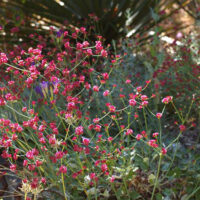
Eriogonum grande var. rubescens
A small, colorful, and highly ornamental native perennial for a sunny spot. Low mounds of grey-green foliage feature flower stems up to a foot tall with rounded heads of intense rosy-pink. Buckwheats have substantial wildlife value, providing pollen and nectar for bees and butterflies, larval food for butterflies, seeds for birds and cover for many creatures. Drought tolerant once established and appreciates decently draining soil. An excellent rock garden plant.
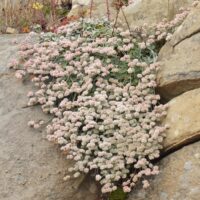
Eriogonum latifolium
Native to our coastal bluffs, this perennial forms neat mounds of silvery white foliage under 1 ft. tall. Flowers develop in dense pom-poms and are creamy white to pinkish. Tolerates sun, wind and drought once established but needs decent drainage. Provide occasional summer irrigation to keep them looking their best. Buckwheats have substantial wildlife value, providing pollen and nectar for bees and butterflies, larval food for butterflies, seeds for birds and cover for many creatures. Deer resistant.
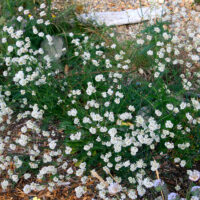
Eriogonum nudum
Few natives are as excellent a source of nectar for bees and butterflies as the buckwheats. This widely distributed species is known for its elegant flower displays on naked stems rising one to three feet above low mounds of grey-green leaves. Naked buckwheat has flower pom-poms ranging in color from white to pink set on slender stems in open clusters up to twelve inches wide. Blooms from late spring into early autumn. Provide full sun to very light shade in soil with decent drainage. Drought tolerant once established. Generally deer resistant.

Eriogonum nudum – robust form
This buckwheat came to us by way of Ginny Hunt and her seed company Seedhunt. Collected from a local race (Santa Cruz area) of naked buckwheat where the flower stems rise to 5 foot or more! Naked buckwheat is the most widely distributed species of buckwheat, growing throughout the state. Forms low mounds of foliage with tall, slender, naked stems, topped with clusters of white to pinkish pom-poms. Plant in full sun to very light shade with good drainage. Drought tolerant once established. Important pollinator plant. Said to be deer resistant.
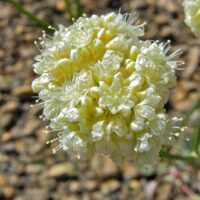
Eriogonum nudum – soft yellow form
This seed strain of the naked buckwheat hails from a particularly robust population found in blue oak savanna, in the foothills of Tehama County. It has soft, buttery-yellow inflorescences, rather than the more common white or soft pink flowered forms. 3-5 feet tall, chunky stems topped with soft yellow, pom-pom shaped flower clusters emerge from a low, narrow, evergreen rosette of rounded leaves from May-August. Provide full-sun, good soil drainage, and little to no water once established. Native bees and butterflies enjoy the flowers. Great for rock gardens. Drought-tolerant.
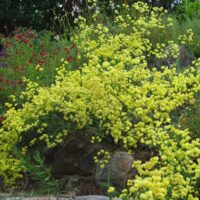
Eriogonum nudum ‘Ella Nelson’s Yellow’
The naked buckwheat has the widest distribution of all the buckwheats, occurring from the coast to timberline in the mountains. This interesting seed strain was collected by Eric Nelson along the middle fork of the Eel River in Mendocino County and named for his grandmother. Instead of the more common white or pink flowers of the species, this strain has beautiful yellow flowers. The spoon shaped leaves which form a low rosette are grey green on top and white and wooly beneath. Late spring brings a multitude of small, bright yellow flowers carried on the bare, leafless stems 18-24 inches above the foliage. Best on well drained soils in full sun where they are drought tolerant once established. Buckwheats are highly attractive to nectar feeding insects. Deer resistant.
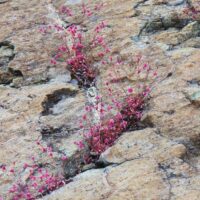
Eriogonum vimineum
Here is an ANNUAL buckwheat found throughout much of California, growing on gravely and volcanic soils. Summer brings showy domes of rose-pink flowers held on wiry stems 18 inches above small clumps of basal leaves. Buckwheats are excellent for attracting beneficial insects providing pollen and nectar for bees and butterflies and seeds for birds. Plant in full sun with little water once established. Good container plant too.
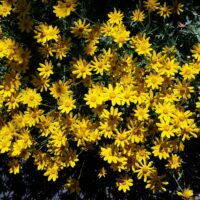
Eriophyllum lanatum ‘Siskiyou’
An extremely variable species ranging from the immediate coast to the high mountains of California and into Oregon. The cultivar 'Siskiyou' is a Siskiyou Rare Plant Nursery selection. Lush gray-green woolly foliage forms low mats up to 10 inches and 3-4 feet wide. Blooms over a long period, spring into fall with cheery 2 inch golden-yellow daisies. This tough perennial will thrive in full sun to light shade, decent drainage and moderate to infrequent summer water once established. The open-faced daisies are an excellent sources of pollen and nectar and make good platforms for insects to perch, attracting butterflies, bees and other insects.
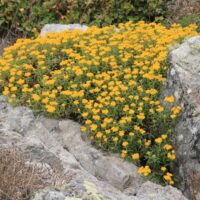
Eriophyllum staechadifolium
This native perennial is perfect for coastal environments where it tolerates full sun, wind, salt spray and drought. Forms leafy mounds 2 - 3 ft. tall and at least as wide. The foliage is grey-green above and silvery beneath with flower heads densley packed with tiny golden-yellow daisies from May through August. Drought tolerant but appreciates occasional summer waterings, especially when grown away from the coast. Excellent for pollinators. Tip pruning helps keep the mounds tidy. Annual pruning back will refresh.
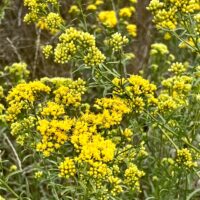
Euthamia occidentalis
This little known, native goldenrod is a pollinator powerhouse, supporting bees, as well as a wide array of butterflies, including the Monarch, who are drawn to the nectar. In late summer and autumn, small, golden-yellow flowers form rounded clusters at the tops of tall, vertical branches, 4’ to 6’ high, clothed in long, slender, leaves. Grows naturally in sunny, low-lying areas which stay at least somewhat moist into early summer, but may be dry later in the year. Spreads quickly by underground rhizomes, especially in areas with perennial moisture, making it good for erosion control, but not suitable for small gardens. In two years, plants should reach about 4’ wide. Great in containers in smaller spaces.
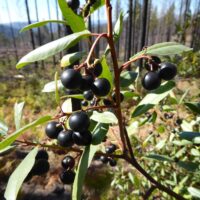
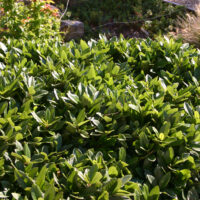
Frangula (Rhamnus) californica ‘Ed Holm’
Prized by gardeners for its low, dense habit and shiny, leathery leaves, this special selection of coffeeberry was discovered along Skyline Dr. in the northern Santa Cruz Mountains. Clusters of small, creamy-yellow flowers are produced from spring through fall and are followed by penny-sized, deep purple fruits. Over time, 'Ed Holm' will reach a height of up to 3 ft. and a width up to 6 ft.. Plant in full sun to light shade. Protect from the hot afternoon sun in hot areas and give moderate to infrequent irrigation. The blossoms are a favorite of bees.
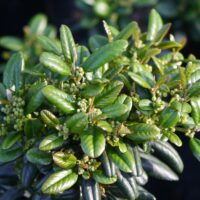
Frangula (Rhamnus) californica ‘Leatherleaf’
Another fine Roger Raiche selection, this coffeeberry cultivar is well worth growing. The evergreen leaves are particularly dark and broad with a mounding habit growing 5 - 6 ft. tall and wide. The tiny flowers attract a wide array of pollinators. Larval food source for pale swallowtail butterfly. The handsome fruits go green to red to black and are enjoyed by small mammals and birds. Plant in sun to light shade. Drought tolerant once established though occasional summer watering is helpful. An adaptable and useful shrub for both formal and naturalistic plantings.
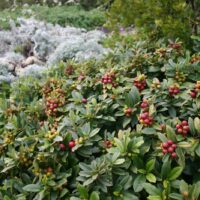
Frangula (Rhamnus) californica ‘Seaview’
This highly sought after selection of our native coffeeberry stays low and compact only reaching 2 – 3 ft tall and up to 6 ft wide. The tidy, deep green leaves form dense rosettes with small cream-colored flowers appearing from spring through summer. Deep purple “berries” form dense clusters in the summer and fall. Enjoys full sun to moderate shade and moderate to occasional water once established. An excellent habitat plant for bees and birds.
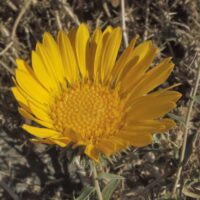
Grindelia camporum
A tough and attractive native perennial found in valleys and lowlands of California. An upright grower, 18-24 inches tall, with resinous foliage and stiff leaves and flower stems. Thick green flower buds hold bright yellow daisies summer through fall which are attractive to bees and butterflies. Best in full sun where it is drought tolerant once established. Tolerates heavy soils and is said to be deer resistant.
Hazardia squarrosa v. squarrosa
For a splash of color in late summer and fall, this goldenbush is a great choice, providing clusters of cheery, golden flowers at the height of the dry season, which supply food for butterflies. Birds enjoy the seeds which follow. Rounded leaves with sawtooth margins line the stems and emit a wonderfully sweet scent. This seed strain comes from a hot area in Big Sur and is remarkably compact and rounded, reaching about 3 ft. tall and wide. We’ve found it to be very adaptable, tolerant of clay soils and zero to occasional irrigation. Likes full sun but will accept a little shade. Plant with buckwheats, Salvias, and California fuchsias. Not usually available in Northern California nurseries.
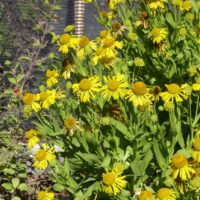
Helenium autumnale
This desirable autumn bloomer is known for its masses of bright yellow daisies up to three inches wide, perched atop stems two to three feet high. Lance-shaped leaves of light green create dense mats six inches high. Native to Northern California and much of North America where it grows in moist meadows. Will slowly increase to form small colonies. Plant in full to part sun and provide regular water. Attracts bees and butterflies. Deer resistant. Despite the common name, this plant is insect pollinated and isn't known to cause hay fever. It was originally used to make snuff, hence the name sneezeweed.
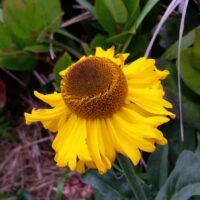
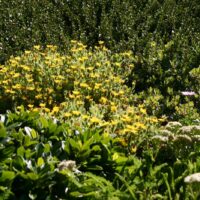
Heterotheca sessiliflora ssp. bolanderi ‘San Bruno Mountain’
Versatile and tough native perennial well suited for the rock garden front of the border or container plantings. Evergreen foliage forms low mats topped with bright yellow daisies in summer - fall. For sunny sites and dryish conditions. Flowers are appealing to bees and butterflies.
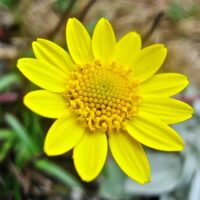
Lasthenia californica ssp. macrantha
Native along the immediate coast of California and just into Oregon, where it forms low, tight mounds of deep green succulent foliage. Cheerful, bright yellow daisies bloom over a long period. Best in full sun with some summer water and good drainage. Long blooming, open faced flowers are excellent sources of nectar and pollen for butterflies, bees and other pollinators.
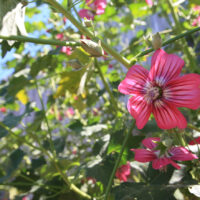
Lavatera (Malva) assurgentiflora
Light green, maple-like leaves with showy, rose-pink flowers with dark veination bloom over a long period from spring to fall. Native to the Channel Islands, this fast growing shrub will grow 10 ft. tall or more. Useful as a drought tolerant, wind resistant, fast growing screen or hedgerow plant, at its best in coastal environments. Inland needs some protection and periodic summer water. Pruning helps maintain a nice habit. Probably best in naturalistic garden designs. A favorite nectar source of orioles.
Lepechinia hastata
A bold and beautiful sage relative which grows 4’-6’ tall and slowly spreads to form a small thicket. Large, fragrant, grey-green leaves are an excellent foil to the reddish-purple flowers which appear on branch tips in summer and early fall. Great in the flower border or out in the “wild” part of the garden. Easy and tough. Full sun to light shade with moderate to occasional water. Looks best when cut to the ground after blooming is done. Attractive to hummingbirds. Deer don’t seem to eat it.
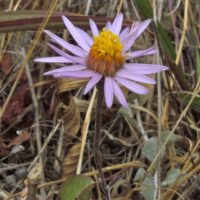
Lessingia (Corethrogyne) filaginifolia
This California native perennial often hugs the ground, spreading widely, it threads its silvery foliage decoratively among other plants. Bright lavender, yellow centered aster-like flowers give a summer long season of bloom. Provide full sun to light shade, some summer water and reasonable drainage. A nectar and larval food source for butterflies. Deer resistant.
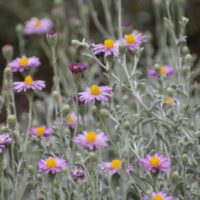
Lessingia (Corethrogyne) filaginifolia ‘Silver Carpet’
A variable species, this selection hails from the Big Sur Coast and was discovered by Carol Bornstein. Forms an attractive ground hugging mat 4 ft. or more wide. The gorgeous silver foliage is the perfect foil for the 1 inch lavender-pink daisies with yellow centers. Tolerates a wide range of conditions including full sun to light shade, drought and wind. Useful groundcover, meadow plant or spiller where its flowers are enjoyed by bees and butterflies. Best with some summer water inland. Deer resistant.
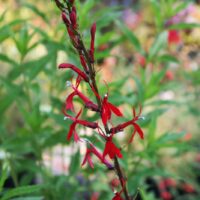
Lobelia cardinalis
Cardinal flower is native to wet places throughout much of North America. A hummingbird favorite with show stopping, intense scarlet-red tubular flowers on erect terminal spikes in late summer. Growing 2 - 3 ft. tall by 2 ft. wide, this clump-forming perennial has dark green, serrated leaves. Tends to be rather short lived, but is a strong re-seeder. Prefers areas with constant moisture and cool sun to part shade, affective in moist areas of woodland gardens, meadows, pond edges, and rain gardens. Attracts hummingbirds and butterflies, but is resistant to deer browse.
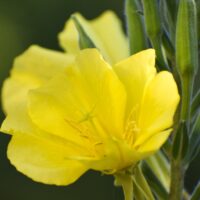
Oenothera elata ssp hookeri
Found in coastal areas from Sonoma County down to San Diego County. A vigorous, showy, winter-deciduous perennial that makes a dramatic border or background planting in full-sun gardens. In late summer into early fall, sprays of large, cheery, bright-yellow flowers with flat, papery petals top tall stalks up to 5’ high that are clothed with light-green lanceolate leaves. Blossoms provide a late season sweet treat for native butterflies and bees. As the name suggests, flowers fold and close during the heat of the day. May vigorously seed about. Moderate to occasional water once established.
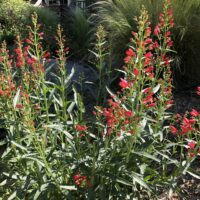
Penstemon barbatus ‘Red Riding Hood’
Trumpet-shaped blossoms of coral-red arise on thick stems up to 2 ft. high on this Dutch selection of the beardlip penstemon. Originating from the American Southwest, this superlative species offers flowers from late spring to the end of summer, enticing hummingbirds, bees and butterflies into the garden. Light green, lanceolate leaves grow densely at the base and climb up the stout stalks. This selection has proven to be very garden tolerant, liking full sun and moderate to infrequent irrigation.
Penstemon barbatus ‘Riding Hood Red’
Trumpet-shaped blossoms of coral-red arise on thick stems up to 2 ft. high on this Dutch selection of the beardlip penstemon. Originating from the American Southwest, this superlative species offers flowers from late spring to the end of summer, enticing hummingbirds, bees and butterflies into the garden. Light green, lanceolate leaves grow densely at the base and climb up the stout stalks. This selection has proven to be very garden tolerant, liking full sun and moderate to infrequent irrigation.
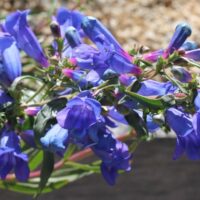
Penstemon heterophyllus ‘Blue Springs’
A seed strain of a highly variable native penstemon. Attractive narrow, shiny, bluish-green leaves topped with dense spikes of narrow bell-shaped blossoms of bright blue. Flowers late spring to early summer, growing to around 1 to 1 1/2 ft. tall and wide. The spent flower spikes should be cut off to encourage more blooming, better form, and longer life. Best in full sun with good drainage and moderate to little summer water.
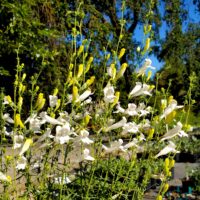
Penstemon heterophyllus ‘GMR White’
An unusual, bright white form of our native foothill penstemon that dazzles with dense blooms from spring to fall. Spring sees the emergence of soft yellow buds on this evergreen perennial, which then open as snowy fresh, tubular flowers. The showy flower stalks reach 18 inches to 2 feet and look spectacular cascading out of a container. A natural selection, its name is an abbreviation of Glendora Mountain Road, the area just north of Los Angeles where it was found. As beloved by hummingbirds and pollinators as the more common blue-violet form of this species and even more shockingly floriferous. Plant in full sun to very light shade where it will have good drainage, and provide occasional to no water. Thrives in large pots. Drought tolerant.