
Berberis (Mahonia) aquifolium
This attractive, western native evergreen has a long history in cultivation for good reason. Erect stems rise 4 to 7 feet or more tall and wide, spreading slowly by underground rhizomes to form dense clumps. Bronzy-red new growth gives way to dark-green, glossy leaves with spiny margins that are prickly to the touch. Cold winters can darken the foliage with purple-red tones. Late spring brings clusters of bright yellow, sweetly scented flowers. Edible blue-black fruits follow and are pretty and tasty. A useful and adaptable shrub in a hedge or a shrubby border. Takes full sun to part shade. Performs best with some afternoon shade in hot areas and moderate to infrequent water. A great habitat plant which provides cover, nectar rich flowers and fruits relished by all. Deer resistant.
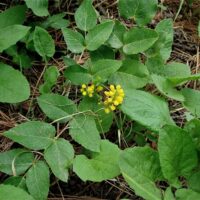
Berberis (Mahonia) aquifolium var. repens
This little cousin of the much larger Oregon grape only gets 1 - 3 ft. tall and spreads underground to create dense, evergreen drifts. The divided leaves have a matte finish with a grey-green color which turns purple-red with frost. Clusters of bright yellow flowers open in spring and are followed by deep blue "grapes" much loved by birds. The sweet-scented flowers are enjoyed by bees and butterflies. Provide full sun to shade and moderate to infrequent irrigation. Deer resistant.
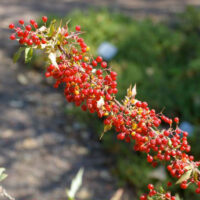
Berberis (Mahonia) nevinii
Nevin's barberry is a very rare southern California shrub with rigidly arching stems densely clothed in pointy silver gray leaflets. Heavy blooming with clear yellow flowers followed by heavy fruiting with bright red translucent fruit. 8 ft. by 8 ft. Does well in sunny well drained locations in the Bay Area. Great companion to matilija poppy and Salvia clevelandii. Very drought tolerant but best with occasional water. Deer resistant.
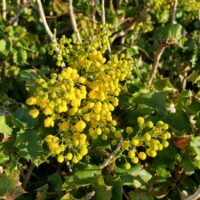

Bouteloua curtipendula
A perennial bunch grass with 2-3 foot stalks of tiny, purple-tinged flowers that emerge in the heat of summer. The common name of the species derives from the arrangement of floral spikelets along one side of the inflorescence. Its blue-green foliage forms low, clumping mounds, turning purple-ish in fall and eventually going winter dormant. As the flowers mature into seeds and dry to golden, they hang decoratively off arching stems, bearing a resemblance to oat grass. Native to a large swath of central North America, its range reaches into hotter, drier areas of Southern California and the Southwest. Adapts to various irrigation schedules and soil types, but requires minimal water once established. Plant in full sun or part shade. Useful for meadows or rock gardens. Seeds attract birds.
Bouteloua gracilis
Here’s a wonderful grass - an important species of the original North American shortgrass prairie. In California it occurs in desert regions. Fine textured light green-gray foliage topped with interesting flowers 8 - 36” tall. The flowers are attached to the stem at right angles and resemble tiny combs. The whole plant turns purple with frost then fades to blonde. Use in mass or as a specimen in rock garden or containers. Often suggested for a mowed or unmowed lawn where it tolerates extreme cold, heat, drought and foot traffic. Deer resistant.
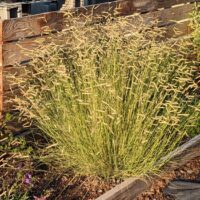
Bouteloua gracilis ‘Blonde Ambition’
An exceptionally robust selection of grama grass, with 2-1/2 to 3 ft. tall flowering stems above the narrow grey-green tufts of foliage, forming clumps up to 3 ft. wide. The curious flowers look like tiny brushes on tall stems, start out chartreuse aging to blonde. They are persistent and will hold on through winter providing many months of ornamental interest. Retains some green foliage in winter in mild areas, goes winter dormant in hot inland situations. Native to the North American shortgrass prairie, this is a rugged species enduring heat, drought, cold, a wide range of soil types and even foot traffic. An excellent water conserving grass for full sun. Deer resistant.
Bouteloua gracilis ‘Pestanas de Angeles’
Long lived, warm season, perennial grass, native to North America. The selection ‘Pestanas de Angeles’ is from San Bernardino County in Southern California. Fine textured, grey-green blades about 6 inches tall. Intriguing flower heads look like little flags or eye lashes on wiry stems under a foot tall. Tolerant of heat, drought and poor soils, this grass is at home in the arid west. Plant in full sun where it will be drought tolerant once established. Blades go dormant in the winter. Excellent in rock gardens, with succulents or as a meadow subject. Good cut flower. Deer resistant.
Brodiaea californica ‘Babylon’
A beautiful selection of a robust species, native to the North Coast Ranges and northern Sierra Nevada. Instead of the more typical lavender-purple colored blossoms, 'Babylon' offers particularly large flowers of pink-lavender. The star shaped flowers are in dense clusters on stout stems up to 24 inches tall. Best in full sun and tolerant of different soil types. Allow to go dry once foliage begins to go dormant. This beauty flowers in late spring/early summer and is favored by butterflies. A good container subject.
Brodiaea elegans
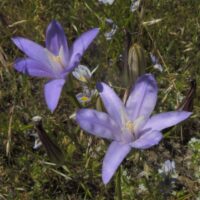
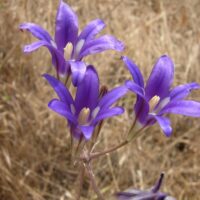
From grassy meadows and open woodlands comes this drought tolerant and colorful wildflower. Open clusters of dainty violet flowers sit atop stems reaching 8 to 20 inches in height. Plant in full sun to bright shade and provide decent drainage. As the name suggests, the harvest Brodiaea is the latest blooming of the Brodiaeas, sometimes not flowering until the end of summer after the grass-like leaves have gone dormant. It spreads rapidly but not invasively to form broad drifts. After blooming, this bulb will sleep until the return of winter rains. Do not irrigate. An excellent candidate for the rock garden where its graceful form will contrast wonderfully with the rigid stone.
Calamagrostis koelerioides
An uncommon but widely distributed mid-sized native grass appearing in meadows and on rocky ridges throughout California. The soft green leaves reach a height of up to 2 ft. tall and will slowly spread to create a small clump. Narrow, feathery grass flowers reach 2 - 3 ft. high in summer and age to a pale tan color. Since this grass is new to us and we don't know of any other nurseries who have grown it, we are uncertain of its requirements. Based on this species' habitat in nature, we would recommend providing it full sun to light shade and moderate to infrequent irrigation with excellent drainage. Deer resistant.
Calamagrostis rubescens
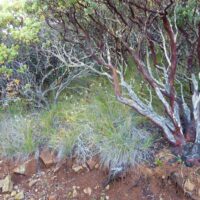
Native to wooded areas throughout the West, this slowly spreading grass forms dense drifts excellent for naturalizing in bright shade. The foliage reaches a height of about 12 inches with narrow inflorescences rising another 12 inches or so. While drought tolerant, it enjoys an occasional watering. Works well under oaks. Deer resistant.
Calliandra californica
Clusters of bright red flower filaments, resembling little dusters, adorn this Baja California native for much of the year. The dainty, fern-like leaves are generally evergreen, though they are less ubiquitous in the winter. This mid-sized shrub reaches up to about 5 ft tall over time and spreads to 5 ft wide, forming a loose, rounded mound. Hummingbirds and butterflies favor the flowers on this unusual member of the pea family. Hardy to around 25 degrees. Plant in full sun to light shade and provide occasional to no irrigation once established. Said to be tolerant of clay soils, but will not like flooding.
Calocedrus decurrens
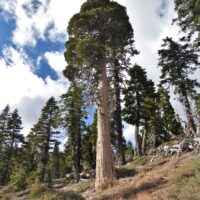
Cinnamon colored bark and a distinctly conical form distinguish this lovely conifer known for its appealing woodsy scent. Bright green, scale-like leaves drape from the ends of branches in dense clusters with small, flattened cones.Native to rocky areas throughout California. Slowly grows to become a large tree not suitable for a small garden. Requires decent drainage and occasional deep waterings when young. Enjoys full to part sun.Striking when planted as a single specimen or when combined with broadleaved trees such as maples and oaks. Deer resistant.
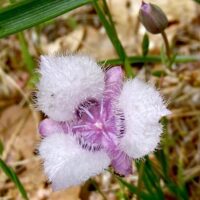
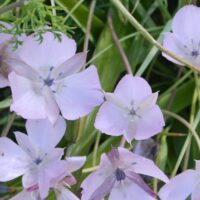
Calochortus uniflorus ‘Cupido’
While many Calochortus are known to be challenging in the garden, this selection is quite easy and blooms in abundance! Blue-grey, iris-like leaves emerge in the winter, followed by soft lavender-pink, tulip-like flowers in late spring. After flowering they will go dormant. Plant in full sun to light shade. Very drought tolerant but will tolerate occasional irrigation. This rare species has a surprisingly wide-ranging distribution, from the coast to the mountains of Northern California. Attracts native pollinators.
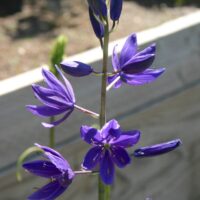
Camassia leichtlinii ssp. suksdorfii
Similar to the common camas, but with larger, star-shaped flowers ranging in color from soft to dark violet-blue on stems up to 3 ft tall. Native to grasslands and moist meadows that dry out in the summer. Also found in open, well lit woodlands. Easy to grow in full sun to light shade in a variety of soil types, including heavy clay. Allow to go dry after seed is set, where it will go completely dormant. This eye catching beauty is appealing to bees, butterflies and hummingbirds. An excellent container plant and cut flower. Deer resistant.
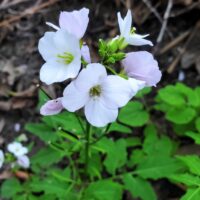
Cardamine californica
One of California's most widespread and earliest spring wildflowers, often beginning to bloom in the winter. Found in somewhat shady locations in a number of plant communities, this slender perennial has rounded basal leaves. Flower stems 10 inches to 20 inches tall are topped with four petaled flowers of pure white to soft pink. This sweet harbinger of spring is easy to grow given a little shade and winter rain. After flowering and setting seed it dies back to its roots where it goes dormant until next year's rains awaken it. Good under oaks.
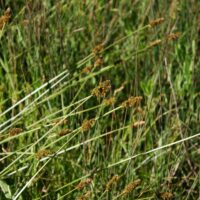
Carex densa
While uncommon in nurseries, this semi-evergreen sedge forms green tussocks which are very useful in seasonally moist meadows and open woodlands. Elongated, chunky seed heads rise above the dense leaf blades on slender stalks up to 2 ½ ft. tall. The foliage reaches 1 to 2 ft. high and slowly spreads to form small clumps. Useful for smaller gardens where you want a sedge that doesn’t spread super vigorously. Tolerates summer drought in somewhat heavier soils. A little extra irrigation will keep this sedge more evergreen. Native to much of California and north to Washington. Deer resistant.
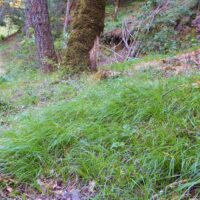
Carex globosa
Here is a sturdy and useful woodland sedge native to well-drained soils in wooded areas. Grows 6 - 12 inches tall and spreads slowly to form bright green tussocks. Useful as a filler among shrubs or trees in filtered shade where it tolerates drought; but some summer water will keep it looking fresh for longer. Great under oaks. Deer resistant.
Carex tumulicola
This is the TRUE Carex tumulicola, the foothill sedge, not to be confused with the so called Berkeley sedge which is correctly identified as Carex divulsa and is non-native AND invasive. Foothill sedge has a wide distribution in California and north to Washington. A tough and adaptable tufted evergreen growing 12 inches (or more) tall and spreading slowly by underground rootstocks. Useful as an informal groundcover under shrubs or trees, for a meadow planting or for soil stabilization where the spreading roots help control erosion. Best with some shade unless right along the coast. Responds to water but is able to tolerate periods of dryness.
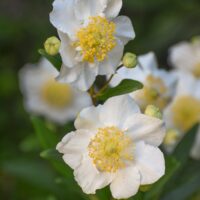
Carpenteria californica
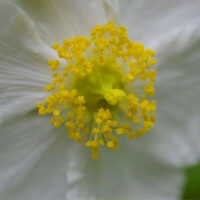
Long in cultivation, this native, evergreen shrub is rare in the wild, with a limited distribution in their native habitat. Forms a multi-branched shrub, 5 - 7 foot tall or more and nearly as wide, with dark green, leathery, lanceolate shaped leaves, which provides a dark foil to the brilliant white flowers. Late spring brings terminal clusters of white, 2 -3 inch, sweetly scented, anemone-like blossoms with yellow centers. An adaptable shrub which makes a striking specimen or foundation plant in a woodland area with morning sun and afternoon shade. Responds well to pruning and can be trained as an espalier. Drought tolerant, but appreciates occasional summer water. Flowers enjoyed by bees and butterflies.
Carpenteria californica ‘Elizabeth’
A beautiful native evergreen shrub 5 - 7 ft. tall and 4 ft. or more wide. Blooms May-July with sweetly scented, pure white, yellow-stamened, camellia-like single flowers. This cultivar is especially free flowering with smaller than usual (2 inch) flowers in masses of up to 20 in each of the terminal clusters. Said to be more disease resistant. Has a narrow upright appearance which is unusual for a native shrub. Best with light shade or morning sun. Drought tolerant, but appearance is improved with some summer water. Does want decent drainage.
Ceanothus ‘Antonette’
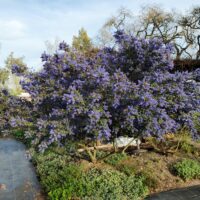
An exciting introduction by Native Sons Nursery which was discovered in their landscape. ‘Antonette’ is believed to be a cross between Ceanothus arboreus and Ceanothus ‘Cynthia Postan’ with unusual elongated leaves which remind us of a rockrose. Grows 8 – 10 feet tall and 6 – 8 feet wide with spectacular displays of frosted, violet-blue flowers in early spring. Before they fully emerge, the flower buds display a pleasing rosy color. Plant in full sun with occasional to little summer water once established. Valuable habitat plant, providing food and cover for birds, bees and butterflies.
Ceanothus ‘Better Than Ray Hartman’
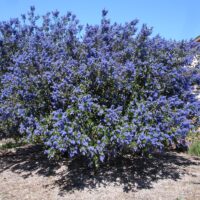
A friend of ours, Eric Nelson, discovered this spectacular selection growing on a property near where he lived. Masses of rich, blue-purple flowers held in large sprays cover the plant in spring, attracting bees and butterflies. The seeds which follow feed an array of birds. Reaches 10 – 15 ft. tall and wide with larger, deep-green, rounded leaves. We believe this plant is an existing cultivar, but none of the Ceanothus experts have been able to reach a consensus on exactly which one, hence the peculiar name referencing a selection which it resembles. Plant in full sun to light shade and water occasionally or less once established.
Ceanothus ‘Blue Jeans’
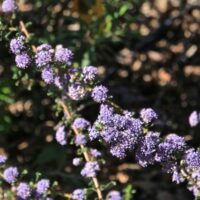
Not the color of denim exactly, the profuse springtime blossoms of 'Blue Jeans' are a rich lavender-purple. Erect evergreen shrub 6 ft. tall and wide with small shiny green leaves. Vigorous and fast growing. Best in full sun with little to no water once established. Tolerates heavy soils. Shrubby Ceanothus provide seeds eaten by bushtits, mockingbirds, quail and finches, as well as cover for birds.
Ceanothus ‘Blue Ray’
A Suncrest Nursery introduction, this is a cross between two popular cultivars, Ceanothus 'Ray Hartman' and Ceanothus 'Dark Star'. Grows 10 feet tall by 15 ft. wide with deep green textured leaves on sturdy stems forming a large mound. Deep vivid blue flowers in dense clusters cover the shrub in spring. Plant in full sun with occasional to no summer water once established. Ceanothus, when in flower, are highly attractive to pollinators of all sorts.
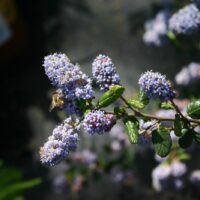
Ceanothus ‘Celestial Blue’
A beautiful hybrid California lilac selected and introduced by Las Pilitas Nursery. Luminous, rich blue flowers, in tight, conical clusters put on a massive display in spring with the added bonus of sporadic blooming through summer and into fall. Growing 6-8 ft. tall and wide with a mounding habit. Useful as an accent, informal hedge or screen shrub where it grows in full sun to light shade with little to no water once established. Ceanothus are an excellent addition to the habitat garden attracting a myriad of insects and birds.