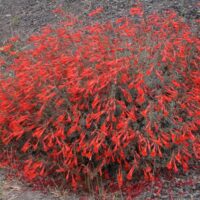
Epilobium ‘Schieffelin’s Choice’
This California fuchsia grows close to the ground - 10 - 12 inches tall with arching flower stalks. Gray foliage makes a wonderful foil for the bright orangey-red tubular flowers which appear summer through fall. Believed to be a cross between E. septentrionale and E. canum. Provide full sun to very light shade. One of the more drought tolerant selections but flowers best with occasional deep watering. Hummingbird favorite. Pruning plants down to a few inches in late autumn helps to rejuvenate them for the following year. Perhaps more deer resistant than other California fuchsias.
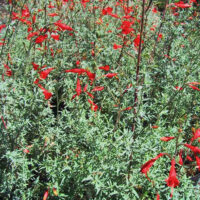
Epilobium canum ‘Bowman’s Hybrid’
This California fuchsia has distinctive narrow, olive-green foliage and an upright habit about 2-3 ft. tall and spreading widely. The orange-red tubular flowers are petite but profuse. Plant in sunny areas. Flowers best with occasional deep watering. Pruning plants down to a few inches in late autumn helps to rejuvinate them for the following year. Hummingbird favorite.
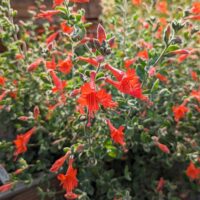
Epilobium canum ‘Calistoga’
Phil Van Soelen’s selection of California fuchsia from the Palisades east of Calistoga. Forms a spreading mat of unusually wide, fuzzy, gray leaves. The flowers are the typical hummingbird attracting orange-red trumpet shape and appear on stalks reaching up to 18 inches high. For sunny areas. Flowers best with occasional deep watering. Pruning plants down to a few inches in late autumn helps to rejuvenate them for the following year.
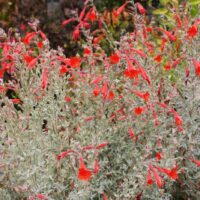
Epilobium canum ‘Carman’s Grey’
We love California fuchsias and have grown this cultivar for over twenty years. Valued for their beauty and important late season nectar source for hummingbirds, California fuchsias offer many forms and foliage colors. 'Carman's Grey' has gorgeous grey foliage which contrasts beautifully with the masses of orangey-red, tubular flowers, late summer and fall. The grey, narrow leaves form soft mounds 2 foot tall, spreading by underground rhizomes, 4 foot or so wide. Plant in full sun to very light shade where it is tolerant of many soil types, even heavy clay, drought tolerant, but best with occasional summer watering. Hummingbird magnet and bees use it too.
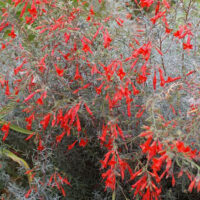
Epilobium canum ‘Catalina’
An outstanding selection of California fuchsia growing 3 ft. tall or more. This may be the tallest cultivar available, sometimes reaching as much as 5 ft. tall. The foliage is silvery-gray with an abundance of large, brilliant orangey-red tubular flowers late summer through fall. This species from southern California is particularly drought tolerant. Hummingbird favorite. Flowers best with occasional deep watering. Pruning plants down to a few inches in late autumn helps to rejuvenate them for the following year.
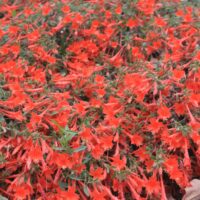
Epilobium canum ‘Cloverdale’
This form of California fuchsia was selected by U.C. Santa Cruz Arboretum from along the Russian River north of Cloverdale. Low, slightly mounding fuzzy olive-green foliage with an abundance of orangey-red tubular flowers the hummingbirds love. Usually stays bellow one ft. in height. 'Cloverdale' is one of the most orange selections of California fuchsia. Plant in full sun. Flowers best with occasional deep watering. Pruning plants down to a few inches in late autumn helps to rejuvenate them for the following year.
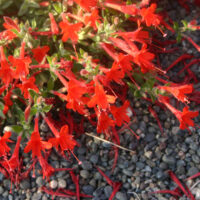
Epilobium canum ‘Everett’s Choice’
A low, spreading form of Californica fuchsia staying below one ft. in height. Distinctive for its fuzzy, gray-green foliage with many scarlet tubular flowers from summer through to fall. Good for sunny areas, though tolerates light shade. Flowers best with occasional deep watering. Attracts hummingbirds. Pruning plants down to a few inches in late autumn helps to rejuvenate them for the following year.

Epilobium canum ‘John Bixby’
A Rancho Santa Ana Botanic Garden introduction, 'John Bixby' is a chance seedling of Epilobium 'Everett's Choice'. Forming a broad patch with a dense rounded form of grey-green foliage 12 -18 inches tall or more. Showy, vivid red-orange tubular flowers put on a spectacular display from summer into fall and are highly attractive to hummingbirds. Vigorous perennial, spreading by underground rhizomes to form large colonies. Plant in full sun to light shade with occasional deep watering for best appearance. Cutting plants down after flowering rejuvinates them for the following year.
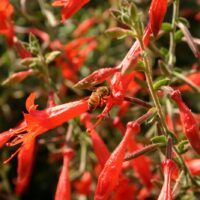
Epilobium canum ‘Liz’s Choice’
This selection of California fuchsia features particularly large, trumpet-shaped, scarlet flowers atop stems reaching 3 ft. tall. The flowers, blooming from summer into fall, are a favorite of hummingbirds and bees. The lance-shaped leaves are a pewter green, providing a striking contrast to the brilliant flowers. It spreads over time to create small colonies. Trim plants down to about 4 inches in winter for vigorous, tidy growth the next year. Provide moderate to infrequent irrigation and full sun. This beautiful cultivar was selected by Milo Baker Chapter CNPS Fellow Liz Parsons.
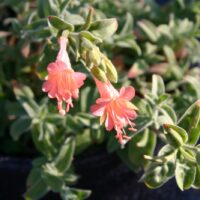
Epilobium canum ‘Marin Pink’
California fuchsias are appreciated for their abundant tubular flowers that bloom in late summer and fall, predominantly in different shades of orange-red. This unusual selection has beautiful PINK tubular flowers produced on sage green mounds of foliage to about 2 ft. tall and spreading by underground rhizomes. Vigorous and easy to grow in full sun to very light shade. Touted as drought tolerant, they will survive dry conditions but will thrive with occasional summer water. Beautiful against a rock wall, in dry stream beds, or naturalistic plantings where they have some room to spread. Hummingbird favorite. Pruning plants down to a few inches in late autumn helps to rejuvenate them for the following year.
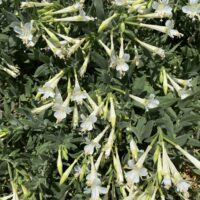
Epilobium canum ‘Summer Snow’
While CA fuchsias are generally known for their abundant showy red flowers, this unusual variety offers surprising clean-white blossoms on low growing green foliage up to 10 inches tall. Spreading by underground rhizomes, this mat forming perennial grows in full sun to light shade with occasional to little summer water once established. Perfect in naturalistic plantings, on slopes amongst boulders, dry creek beds or rock walls. California fuchsias bloom heavily late summer into fall and their tubular flowers are hummingbird favorites. The habit of this plant can be improved with shearing in the winter.
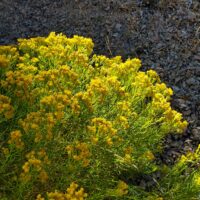
Ericameria arborescens
Native to chaparral regions throughout California, this tall, billowy shrub stands out with its soft and narrow, bright green leaves and, in the summer and early fall, clusters of small yellow flowers. Goldenfleece reaches 6 ft. or more tall with a width of around 4 ft. A wonderful accent plant for the dry garden, especially when combined with dark-foliaged plants such as ceanothus, toyon and manzanitas. Prefers full sun and excellent drainage. Very drought tolerant once established. Excellent for bees and butterflies. Deer resistant.
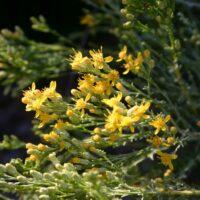
Ericameria ericoides
Native to sand dunes from Long Beach north to Bodega Bay, this low shrub resembles a heather, covered with clusters of small yellow daisies in late summer and fall. Reaching a height of up to 3 feet and spreading to 4 feet, making it an ideal shrub for the smaller garden. Needs occasional water in interior locations and full sun to light shade. Requires well-draining soil. Plant with Ceanothus, low manzanitas and pacific reed grass for a taste of the coast in your own garden. Excellent late season nectar source for bees and butterflies. A light winter pruning will help keep it dense and compact. Said to be deer resistant.
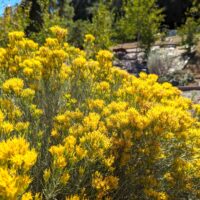
Ericameria nauseosa
This classic plant of the high desert grows in dry, hot, rocky areas throughout much of interior California and throughout the West. In summer and autumn, clusters of golden, star-like flowers cover the tips of the white branches on this low, rounded shrub which reaches up to 3 - 4 ft. tall and wide. Fine, white hairs cover the narrow leaves, giving the plant a ghostly grey-white appearance. Needs a sunny location with excellent drainage and little to no irrigation once established. Bees and butterflies love the flowers. A larval host for the northern checkerspot butterfly.
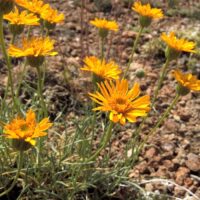
Erigeron linearis
This native Erigeron grows in a number of western states, including California, where it is found in the mountains, on rocky slopes, sagebrush scrub and desert plant communities. Most Erigeron species flowers are white, pink or shades of purple, but this low growing, tufted perennial sports dime-sized, yellow daisies, in the late spring to early summer. The flower buds nod at first, then straighten as they open above the mound of narrow leaves, rising to around 8 inches or so tall and getting about as wide. A natural for the dry garden, rock garden, crevice, wall or container, where it gets full sun and excellent drainage. Bees and butterflies are attracted to the flowers, including several checkerspot butterfly species and the white-lined sphinx moth.
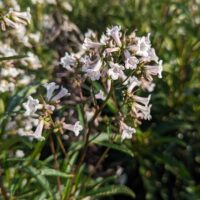
Eriodictyon californicum
Uncommon in the nursery trade, this aromatic, evergreen shrub is native to dry habitats of chaparral and mixed evergreen forest plant communities in North and Central California and into Oregon. An opportunist, this shrub stump sprouts after fires and grows with renewed vigor after any soil disturbance. The dark green, leathery leaves are covered in a shiny, fragrant, resin and are sticky to touch. The common name means, holy herb, and the pungent leaves have a long history of medicinal uses. Grows 3 - 5 ft. tall and spreads by underground roots to form a colony. Late spring brings clusters of small, trumpet-shaped flowers of pale lavender, sometimes white or pale blue, which are highly attractive to butterflies, hummingbirds and bees. Plant in full sun with good drainage and little water once established. Deer resistant.
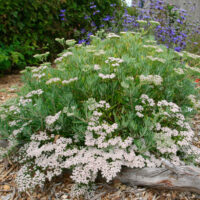
Eriogonum arborescens
A large, shrubby buckwheat with narrow, pale green foliage and sturdy, flat-topped inflorescences of creamy white to pink flowers. The flowers age over time, eventually turning reddish brown, remaining ornamental for a long period. Grows 3 to 4 ft. tall and slightly wider. Normal to very lean well-drained soils. Especially drought tolerant along the coast, may need infrequent summer water inland and possibly a little afternoon shade. Buckwheats are excellent additions to habitat gardens, providing pollen and nectar for bees and butterflies and seeds for many creatures. Deer resistant.
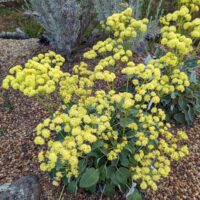
Eriogonum compositum – yellow flowered form
This unusual form of the native arrowleaf buckwheat features soft yellow flowers, as opposed to the more come cream-colored ones. In spring, flattened clusters of blossoms emerge on stout stems held at least a foot above rounded mounds of large, fuzzy, gray-green leaves, reaching up to 2 ft wide. Found in gravelly soils in seasonally dry areas which bake in summer but freeze in the winter. Plant in full sun and water infrequently once plants are established. A surprisingly adaptable species which does well in local gardens. As with other buckwheats, butterflies and bees love the flowers. Numerous butterfly species use this plant as a larval host. Native from Sonoma and Napa Counties north to Washington and east to Idaho.
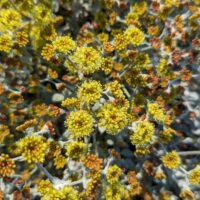
Eriogonum crocatum
A rare buckwheat grown for its beautiful gray, felty foliage and bright, clear yellow flowers. The yellow flowers open from brown buds and then age to a dark rusty brown. Grows 1 - 2 ft. tall and wide, this perennial requires full sun and good drainage. Little to no summer water once established. This Ventura County, California native is hardy to about 15°F. Good nectar source for bees and butterflies. Deer resistant.
Eriogonum elongatum
This buckwheat is native to dry, rocky places, from Monterey Bay south to Baja, in coastal scrub and chaparral plant communities. Super drought tolerant and late blooming, supporting native bees, parasitic and predatory insects and butterflies. Forms a low mound of gray foliage, topped with long, leafless, flower stems, rising 2 - 3 ft. tall. Flowers late in the summer with ball-like clusters of tiny white and pink flowers spaced along the tall, gray, tomentose stems. Full sun, good drainage. Tolerant of serpentine soils. Deer resistant.
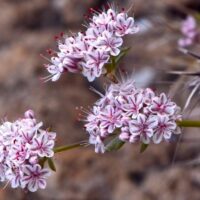
Eriogonum fasciculatum
This adaptable buckwheat is a native of central and southern California. It is a pioneer plant capable of surviving and colonizing some of the hottest driest sites. These attributes are very useful in a garden setting but it should not be planted in or adjacent to wildlands where it may escape and displace local natives. Small native shrub, forming a broad mound 3-4 ft. high and at least 4 ft. wide. Flower clusters are creamy white to pink, turning an attractive rust color with age. Good erosion control plant - best in a well drained, sunny site. Flowers attractive to bees and butterflies. Deer resistant.
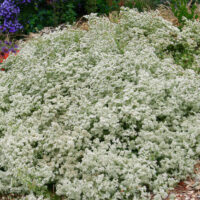
Eriogonum fasciculatum ‘Warriner Lytle’
An interesting form of California buckwheat introduced by the Theodore Payne Foundation. Grows quickly into a low and spreading evergreen groundcover clothed with small, needle-like leaves, 18 inches tall and 6 to 8 feet wide. From late spring to early fall, tight clusters of creamy-whitish pink flowers appear which are very attractive to bees and butterflies. As the flowers go to seed they gradually turn dark russet and are attractive to seed eating birds and mammals. Excellent for dry slopes where it will grow in full sun to light shade with good drainage. Quite drought tolerant once established. Deer resistant.
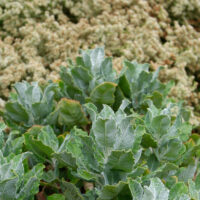
Eriogonum giganteum
Native to the Channel Islands of Southern California, this buckwheat can grow to be a very large mounding shrub with gray felted leaves, 4 - 5 ft. tall and wide. The flower stalks have large, flat sprays of cream-colored to pale pink flowers in summer and are prized by arrangers of dried bouquets. Flowers are attractive to bees and butterflies and birds enjoy the seeds. Best in sunny well-drained sites. Drought tolerant but in hot inland situations they look best with occasional deep waterings in summer.
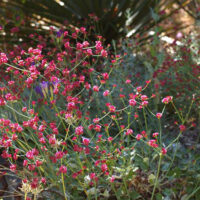
Eriogonum grande var. rubescens
A small, colorful, and highly ornamental native perennial for a sunny spot. Low mounds of grey-green foliage feature flower stems up to a foot tall with rounded heads of intense rosy-pink. Buckwheats have substantial wildlife value, providing pollen and nectar for bees and butterflies, larval food for butterflies, seeds for birds and cover for many creatures. Drought tolerant once established and appreciates decently draining soil. An excellent rock garden plant.
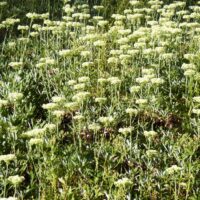
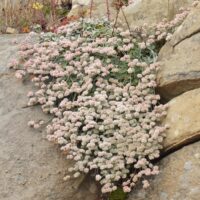
Eriogonum latifolium
Native to our coastal bluffs, this perennial forms neat mounds of silvery white foliage under 1 ft. tall. Flowers develop in dense pom-poms and are creamy white to pinkish. Tolerates sun, wind and drought once established but needs decent drainage. Provide occasional summer irrigation to keep them looking their best. Buckwheats have substantial wildlife value, providing pollen and nectar for bees and butterflies, larval food for butterflies, seeds for birds and cover for many creatures. Deer resistant.
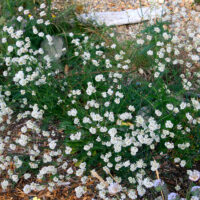
Eriogonum nudum
Few natives are as excellent a source of nectar for bees and butterflies as the buckwheats. This widely distributed species is known for its elegant flower displays on naked stems rising one to three feet above low mounds of grey-green leaves. Naked buckwheat has flower pom-poms ranging in color from white to pink set on slender stems in open clusters up to twelve inches wide. Blooms from late spring into early autumn. Provide full sun to very light shade in soil with decent drainage. Drought tolerant once established. Generally deer resistant.
Eriogonum nudum – robust form
This buckwheat came to us by way of Ginny Hunt and her seed company Seedhunt. Collected from a local race (Santa Cruz area) of naked buckwheat where the flower stems rise to 5 foot or more! Naked buckwheat is the most widely distributed species of buckwheat, growing throughout the state. Forms low mounds of foliage with tall, slender, naked stems, topped with clusters of white to pinkish pom-poms. Plant in full sun to very light shade with good drainage. Drought tolerant once established. Important pollinator plant. Said to be deer resistant.
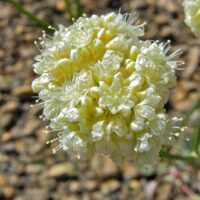
Eriogonum nudum – soft yellow form
This seed strain of the naked buckwheat hails from a particularly robust population found in blue oak savanna, in the foothills of Tehama County. It has soft, buttery-yellow inflorescences, rather than the more common white or soft pink flowered forms. 3-5 feet tall, chunky stems topped with soft yellow, pom-pom shaped flower clusters emerge from a low, narrow, evergreen rosette of rounded leaves from May-August. Provide full-sun, good soil drainage, and little to no water once established. Native bees and butterflies enjoy the flowers. Great for rock gardens. Drought-tolerant.
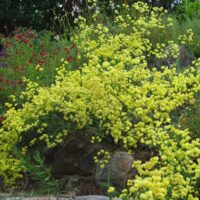
Eriogonum nudum ‘Ella Nelson’s Yellow’
The naked buckwheat has the widest distribution of all the buckwheats, occurring from the coast to timberline in the mountains. This interesting seed strain was collected by Eric Nelson along the middle fork of the Eel River in Mendocino County and named for his grandmother. Instead of the more common white or pink flowers of the species, this strain has beautiful yellow flowers. The spoon shaped leaves which form a low rosette are grey green on top and white and wooly beneath. Late spring brings a multitude of small, bright yellow flowers carried on the bare, leafless stems 18-24 inches above the foliage. Best on well drained soils in full sun where they are drought tolerant once established. Buckwheats are highly attractive to nectar feeding insects. Deer resistant.