Arctostaphylos x media – Point Arena forms
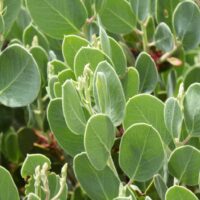
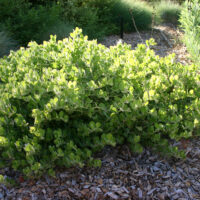
This special and diverse group of manzanitas come from Point Arena on the southern Mendocino Coast. These naturally occurring hybrids involve at least two species: A. uva-ursi, A. columbiana and sometimes A. nummularia. The resulting offspring have wonderfully varying features. The leaves range from large, light-green, and fuzzy to small, dark-green and glossy. The plants can form a mounding habit reaching up to 4 feet tall or hug the ground to form dense mats. Plant in full sun to light shade and give moderate to infrequent irrigation once established. Plants grown in hot areas will benefit from extra irrigation and some afternoon shade.

Arctostaphylos x media – Tilden form
This big-leaved selection was discovered at Point Arena on the southern Mendocino coast by Steve Edwards of Tilden Botanic Garden. Distinctive for its large, hairy, apple-green leaves and low, dense form only reaching up to about 2 ft in height and at least 6 ft. in width. Clusters of white flowers appear in spring followed by round, bright green fruits. Plant in full sun to light shade and provide moderate to occasional irrigation once established. Should be quite drought tolerant once established.
Arctostaphylos x media ‘Humboldt Mystery’
Arching branches and a mounding habit up to 6 ft. tall and 8 ft. wide distinguish this manzanita from its relatives. In winter, pinkish-white flowers provide nectar for hummingbirds and bees, followed by large, red berries in the autumn. Burnished red trunks display a colorful backdrop to the leathery, large, dark green leaves. Plant in full sun to light shade and provide moderate to infrequent irrigation. James Roof of Tilden Botanic Garden discovered this unusual selection somewhere on the Humboldt Coast, but, true to his enigmatic character, refused to say where he found it. It is believed to be a natural cross between bearberry and the hairy manzanita.
Arctostaphylos x media ‘Peter Ehrlich’
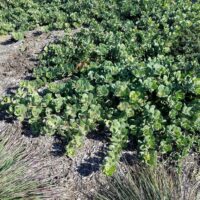
This unusual manzanita from the southern Mendocino coast features what may be the largest leaves of any of the groundcover manzanitas. The round, grey-green foliage mounds densely over time to reach a height of about 3 ft. and a width of up to 8 ft. Clusters of white flowers gather at branch tips in winter, followed by little apple-like fruits in the spring. While fairly adaptable in the garden, decent drainage is best and full sun to light shade. Accepting of moderate irrigation but will become quite drought tolerant once established.
Arctostaphylos x media ‘Reina de Arena’
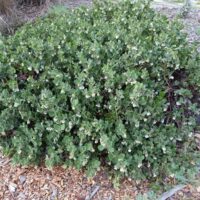
An outstanding selection from a special population of natural manzanita hybrids, holding court on the rugged, fog shrouded, coastal bluffs of Point Arena in Mendocino County. The "Queen" forms a lovely, compact mound of large, rounded, fuzzy leaves, reaching up to about 2 ft. high and at least 6 ft. wide. Elegant, pure white, urn-shaped flowers decorate the branch tips in winter and are an early nectar source for hummingbirds and bumblebees. Plant in full sun to light shade and give moderate to infrequent summer water once established. Plants grown in hot areas will benefit from some afternoon shade and extra irrigation.
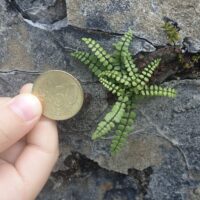
Asplenium trichomanes
This small fern is found in rocky habitats almost worldwide, though uncommon in California, where it is found only in Del Norte County. Tiny, dark green, oval leaves line the black stems of this diminutive evergreen fern. The narrow fronds form short tufts under 8 inches tall that spread slowly. Easy to grow, this little cutie is perfect for tucking into a shady rock garden, wall or container planting. Best in gritty, well drained soils with regular to moderate summer irrigation. Deer resistant.
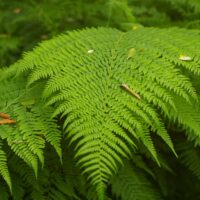
Athyrium filix-femina
Native to much of North America, lady fern grows in moist shady places. The newly emerging fiddleheads in the spring are particularly attractive. The graceful, delicate looking fronds grow 3 foot or more tall by 3 ft. or more wide. Lovely in a forest setting, as a background plant, or around a pond. Goes dormant in the winter. Plant in full to part shade with regular water.
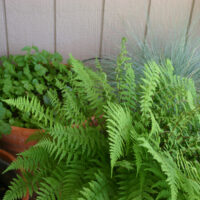
Athyrium filix-femina ‘Minutissimum’
A miniature form of the lovely lady fern, growing up to one foot tall and two feet wide. Forms compact mounds of finely divided light green fronds. Perfect for the small spaces, rock gardens or containers. A vigorous and hardy fern needing only shade and moisture to thrive. Dies back to the ground in the winter. The new unfurling fiddleheads adds charm in the spring. Deer resistant.
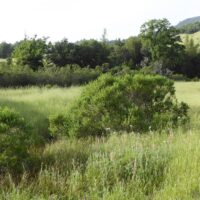
Baccharis pilularis
This is the upright form of coyote bush, growing 4 - 8 ft. tall and wide. Valued for its ability to flourish in a wide range of conditions. Also valued as an excellent habitat plant offering food and cover to a wide variety of wildlife. Flowers are not showy and the male and female flowers are borne on separate shrubs. This crop of plants are a mix of males and females and one can’t tell until they bloom. Plant in sunn or light shade. Not fussy about soils. Quite drought tolerant once established. Responds well to pruning or shearing, working well as a screen. Deer resistant.
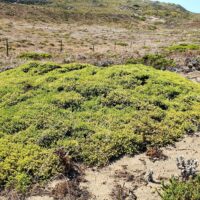
Baccharis pilularis – Bodega Dunes form
Coyote bush is a tough, native, evergreen shrub, forming mounds of dense foliage that hold soil and provide food and cover for birds and mammals. Flowers are small and cream-colored and appear in the autumn. This crop is grown from seed collected in the Bodega Bay Dunes from parents that were under two feet tall and around 6 ft or so wide. Time will reveal the exact form and sex of each plant in this crop. Both male and female plants have significant habitat value, with their combined contributions of abundant pollen, nectar and copious seed late in the season. It will be a surprise as well as a useful addition to the habitat garden. Plant in full sun, though a little shade is helpful in hotter sites. Shear occasionally to renovate and keep dense. Drought tolerant on the coast, but best with occasional water inland. Deer resistant.
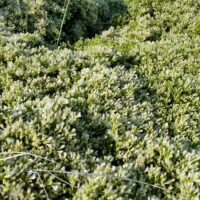
Baccharis pilularis – female
Upright form of coyote brush, growing 4 - 8 ft. tall and wide. Valued for its ability to flourish in a wide range of conditions. Also valued as an excellent habitat plant offering food and cover to a wide variety of wildlife. Flowers are not showy and the male and female flowers are borne on separate shrubs. Theses plants are FEMALE and will produce seed (when male plants are present). An abundance of pollinators and beneficial insects use Baccharis flowers and birds love their seeds. Plant in sun to light shade. Not fussy about soils. Quite drought tolerant once established. Responds well to pruning or shearing and is useful as a screen. Deer resistant.
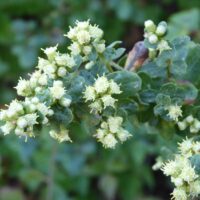
Baccharis pilularis – male
Upright form of coyote brush, growing 4 - 8 ft. tall and wide. Valued for its ability to flourish in a wide range of conditions. Also valued as an excellent habitat plant offering food and cover to a wide variety of wildlife. Flowers are not showy and the male and female flowers are borne on separate shrubs. These plants are MALE and produce ivory colored flowers with pollen and nectar. An abundance of pollinators and beneficial insects use Baccharis flowers. Plant in sun to light shade. Not fussy about soils. Quite drought tolerant once established. Responds well to pruning or shearing and is useful as a screen. Deer resistant.
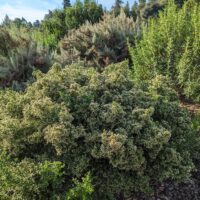
Baccharis pilularis ‘Mayacama Mound’
This dense, bright green, gumdrop-shaped coyote bush only reaches about 3 ft tall and spreads a wider. We discovered this heat and drought tolerant selection in a batch of seedlings from inland Sonoma Co.. A great alternative for the ubiquitous ‘Twin Peaks’, which is a coastal selection and less suitable for hot, dry sites. Plant in full sun to light shade where mature plants won’t need supplemental water, but an infrequent deep soak will keep them looking fresh. The small, whitish flowers are relished by pollinators in the early autumn. This selection is female, so the late autumn seeds provide an important food source for birds. A sturdy, low, evergreen shrub for tough situations.
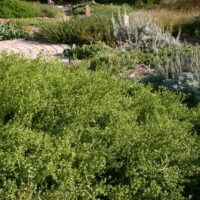
Baccharis pilularis ‘Pigeon Point’
Adaptable and dependable low growing form of the native coyote bush. Forms a mound of bright green leaves with an undulating habit 2 - 3 ft. tall and 6-8 ft. wide. Able to tolerate many soil types and watering regimes this shrub is best in full sun to light shade. Extremely drought tolerant along the coast but best with moderate to occasional summer water inland. When watered and annually trimmed to keep low and free of debris it is recommended for fire resistance landscapes. A good addition to the habitat garden, coyote bush offers excellent cover to a wide variety of wildlife. ‘Pigeon Point’ is a male selection and does not make seed. Deer resistant.
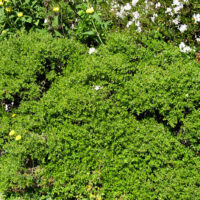
Baccharis pilularis ‘Twin Peaks’
One of the fastest, toughest, densest evergreen native large scale groundcovers. Discovered on Twin Peaks in San Francisco. Grows at least to 6 ft. wide and 2 - 3 ft. tall. Extremely drought tolerant along the coast but best with moderate to occasional summer water inland. Shear hard annually in spring to keep rejuvenated. Sun on coast, afternoon shade inland. This is a male selection so it won't produce seeds. Deer don’t seem to eat it.
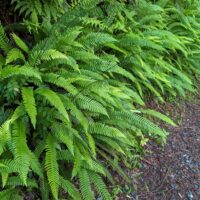
Blechnum (Struthiopteris) spicant
A beautiful and charming fern native to moist coastal forests of northern California. Deep green glossy, narrow fronds are of two strikingly different forms. The outer skirt of fronds is evergreen. The central "fertile" fronds are stiffly erect and airy. It makes for a striking effect. Grows 18" to 2 ft. tall and wide. Best with partial shade to shade and regular moisture.
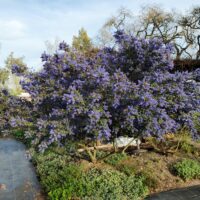
Ceanothus ‘Antonette’
An exciting introduction by Native Sons Nursery which was discovered in their landscape. ‘Antonette’ is believed to be a cross between Ceanothus arboreus and Ceanothus ‘Cynthia Postan’ with unusual elongated leaves which remind us of a rockrose. Grows 8 – 10 feet tall and 6 – 8 feet wide with spectacular displays of frosted, violet-blue flowers in early spring. Before they fully emerge, the flower buds display a pleasing rosy color. Plant in full sun with occasional to little summer water once established. Valuable habitat plant, providing food and cover for birds, bees and butterflies.
Ceanothus ‘Better Than Ray Hartman’
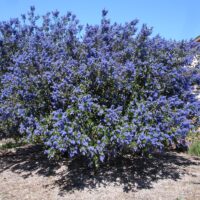
A friend of ours, Eric Nelson, discovered this spectacular selection growing on a property near where he lived. Masses of rich, blue-purple flowers held in large sprays cover the plant in spring, attracting bees and butterflies. The seeds which follow feed an array of birds. Reaches 10 – 15 ft. tall and wide with larger, deep-green, rounded leaves. We believe this plant is an existing cultivar, but none of the Ceanothus experts have been able to reach a consensus on exactly which one, hence the peculiar name referencing a selection which it resembles. Plant in full sun to light shade and water occasionally or less once established.
Ceanothus ‘Blue Jeans’
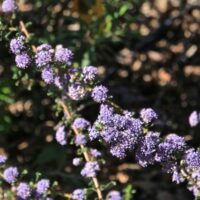
Not the color of denim exactly, the profuse springtime blossoms of 'Blue Jeans' are a rich lavender-purple. Erect evergreen shrub 6 ft. tall and wide with small shiny green leaves. Vigorous and fast growing. Best in full sun with little to no water once established. Tolerates heavy soils. Shrubby Ceanothus provide seeds eaten by bushtits, mockingbirds, quail and finches, as well as cover for birds.
Ceanothus ‘Blue Ray’
A Suncrest Nursery introduction, this is a cross between two popular cultivars, Ceanothus 'Ray Hartman' and Ceanothus 'Dark Star'. Grows 10 feet tall by 15 ft. wide with deep green textured leaves on sturdy stems forming a large mound. Deep vivid blue flowers in dense clusters cover the shrub in spring. Plant in full sun with occasional to no summer water once established. Ceanothus, when in flower, are highly attractive to pollinators of all sorts.
Ceanothus ‘Celestial Blue’
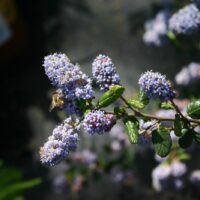
A beautiful hybrid California lilac selected and introduced by Las Pilitas Nursery. Luminous, rich blue flowers, in tight, conical clusters put on a massive display in spring with the added bonus of sporadic blooming through summer and into fall. Growing 6-8 ft. tall and wide with a mounding habit. Useful as an accent, informal hedge or screen shrub where it grows in full sun to light shade with little to no water once established. Ceanothus are an excellent addition to the habitat garden attracting a myriad of insects and birds.
Ceanothus ‘Centennial’
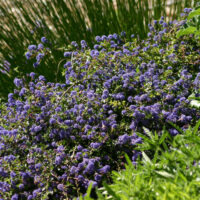
This low growing Ceanothus has bright, cobalt-blue flowers and small dark-green, shiny leaves. Spreads quickly to around one foot tall by 6 - 8 feet wide. The flowers are displayed in profusions of small pom-poms colored an intense deep-blue set above small glossy foliage. Drought tolerant but will tolerate moderate irrigation in faster draining soils. More shade tolerant than many Ceanothus but will take full sun except in hot, inland areas. Selected by Roger Raiche at Horseshoe Cove, Sonoma County.
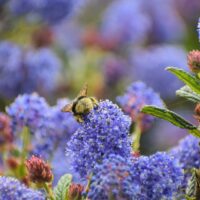
Ceanothus ‘Concha’
An adaptable shrub growing 6 ft. tall and wide, with a dazzling display of glowing purple-blue flowers in the spring. The gracefully arching branches carry dark green shiny leaves and are tolerant of light pruning. Thrives in full sun with little or no water once established. More tolerant of heavy soils and summer watering than most ceanothus. Shrubby Ceanothus provide seeds eaten by bushtits, mockingbirds, quail and finches, as well as cover for birds.
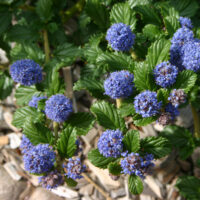
Ceanothus ‘Coronado’
Phil van Soelen selected this striking natural hybrid from along the Sonoma Coast. It was named for the late David Coronado, our dear friend and a talented plantsmen. Compact habit growing to around 2 ft. tall and 6 ft. wide with dark green, deeply veined, toothed leaves. Frosty blue buds open to luminous deep blue blossoms in early spring. Perhaps best in somewhat cooler climates where it performs beautifully in full sun with moderate to no water once established. Ceanothus are excellent habitat plants providing cover and food for wildlife. The early flowers provide nectar for pollinators and seeds for birds. The myriad of insects attracted to the flowers are an added attraction to birds.
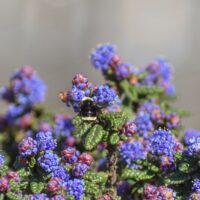
Ceanothus ‘Dark Star’
This popular small leaved shrub reaches 4 - 6 ft. high by 6 - 10 ft. wide. The electric cobalt-blue flowers cover the plant in spring and are very popular with bees and butterflies. Plant in full sun and provide decent drainage. Not a good choice for hot, inland areas. Drought tolerant. 'Dark Star' is VERY similar to 'Julia Phelps' but differs mainly in size. 'Dark Star' tends to stay a little smaller. Shrubby Ceanothus provide seeds eaten by bushtits, mockingbirds, quail and finches, as well as cover for birds.
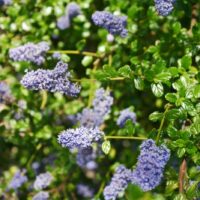
Ceanothus ‘Frosty Blue’
A Rancho Santa Ana introduction from the mid 1970's. This upright evergreen shrub reaches 8 to 12 feet tall and 10 to 15 feet wide with glossy green, textured foliage. Flowers in late spring with 2-4 inch panicles of beautiful blue flowers with a frosted appearance due to the white bracts on the buds. Useful as a specimen or screen due to its rapid growth. Amenable to pruning and can be trained into a small tree or espaliered subject. This reliable cultivar tolerates heavy soils better than most upright Ceanothus. Does best in full sun and will be drought tolerant once established. California lilac are valuable additions to the habitat garden.
Ceanothus ‘Joan Mirov’
A naturally occurring hybrid from the Sonoma Coast selected by Roger Raiche and introduced by the U.C. Berkeley Botanic Garden. Low spreading habit with a dense form grows 4 ft. tall spreading widely 6-10 ft. or more. The small dark green shiny leaves are topped with an abundance of dark pink buds opening to cobalt blue flower clusters in the spring. An excellent bank cover where a dense ground covering shrub is needed on a sunny dry site. When planted inland a little afternoon shade and some summer irrigation is best. Ceanothus are valuable habitat plants where they offer food and cover and excellent forage for pollinators.
Ceanothus ‘Joyce Coulter’
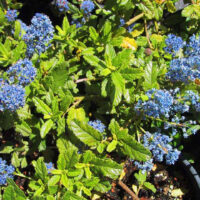
A very useful medium sized mounding evergreen groundcover discovered in 1956 by John Coulter. Grows 2 - 5 ft. tall and spreads 12 ft. or more wide. Medium-blue flowers cover this shrub in spring. Tolerates garden conditions better than most Ceanothus. Responds well to shearing and can easily be kept to a more compact size. Plant in full sun where it is drought tolerant but best with some summer water in hot interior sites. Shrubby ceanothus provide seeds eaten by bushtits, mockingbirds, quail and finches, as well as cover for birds.
Ceanothus ‘Julia Phelps’
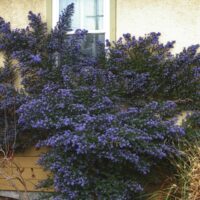
This much admired hybrid Ceanothus features a compact and bushy form, about 6 to 8 ft. tall and 8 to 10 ft. wide. Spectacular in spring when glowing dark indigo flowers cover the plant, accented by reddish buds. Small and crinkled dark green leaves provide an excellent backdrop for the richly colored flowers. Plant in full sun. Needs good drainage and summer drought once established. Does not do well in hot, interior climates. Very hard to distinguish from 'Dark Star', 'Julia Phelps' is somewhat larger. Shrubby Ceanothus provide seeds eaten by bushtits, mockingbirds, quail and finches, as well as cover for birds.