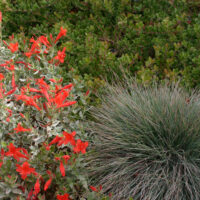
Festuca idahoensis ‘Muse Meadow’
Idaho fescue is a widely distributed native bunch grass growing in seasonally dry habitats below 5,000 ft. The cultivar ‘Muse Meadow’ was selected in the Marble Mountains by Nevin Smith of Suncrest Nursery. Forms hummocks of fine-textured blue blades around 6 inches tall, making it one of the smallest native Idaho fescue cultivars. The flower stems are 12 - 18 inches tall and become straw colored with age. Best in well drained soils in full sun or partial shade. Protect from the hot afternoon sun in hot areas. Provide moderate to occasional irrigation. Deer tolerant.
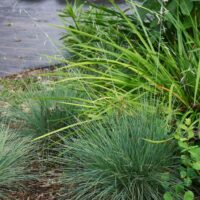
Festuca idahoensis ‘Stony Creek’
From Del Norte County comes this blue-gray native. Tolerant of full sun even inland, getting chalkier with summer scorching, but would prefer some afternoon shade. It grows to about 12 inches by 18 inches, with inflorescences rising to 2 ft in height. Enjoys moderate to occasional water. Good drainage, as its name implies. Deer resistant.
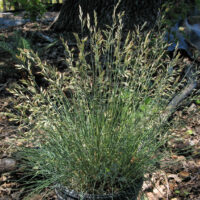
Festuca idahoensis ‘Tomales Bay’
This attractive blue-green selection of our native bunchgrass was discovered in the Nicasio area of Marin County. The soft foliage reaches a height of up to a foot and a width of about 1 1/2 ft.. The inflorescences are smaller than is typical for this species and can grow up to 18 inches tall. Best with full sun near the coast and light afternoon shade inland. Prefers moderate to occasional water. Deer resistant.

Festuca idahoensis ‘Warren Peak’
A Nevin Smith selection of Idaho fescue from the Warner Mts. in northeastern California. Forms dense 8 inch hummocks of very narrow bright green blades that become grey-blue with age. Perhaps the bluest of the native Idaho fescues. The 1 - 2 ft. tall flowering stems are silvery in color. Best in well draining soils in full sun to part shade (especially in hot regions) with moderate to occasional water. Deer resistant.
Festuca occidentalis
Western fescue has a wide distribution in western north America, largely found in low to mid elevations of Central California north to British Columbia. Native to conifer, oak and mixed evergreen woodlands where it grows in light shade. Forms dense tufts of fine evergreen foliage 6-12 inches tall. Delicate flower panicles on stems rise 2 ft. or so above the blades in early spring or summer. A nice accent in lightly shaded areas with decent drainage and some summer moisture. Deer resistant.
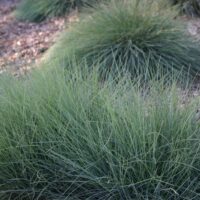
Festuca rubra – Molate strain
Discovered on Point Molate near Richmond, this selection spreads to form soft, flowing drifts of gray-green foliage 12 to 18 inches tall with graceful, open flowers rising to 3 feet. One of the biggest forms of our native red fescue, it’s eye-catching when planted in large masses or when combined with mounding shrubs or some of the more robust native bulbs. Very choice for a meadow or parking strip. Prefers some afternoon shade in the hotter climates and occasional water away from the coast. More drought tolerant than many other red fescues. Deer resistant.
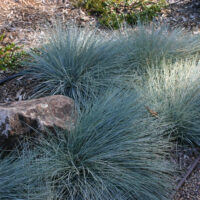
Festuca rubra ‘Patrick’s Point’
Discovered on a rock at Patrick's Point on our north coast, this perennial grass slowly spreads by creeping rhizomes to form tufted drifts of silvery blue. Effective as a component of a meadow or as a small scale groundcover. Typically at its best in situations where it is either unmown or infrequently mown. The 6 - 12 inch tall, vivid blue-gray blades have a soft flowing appearance which combines strikingly with dark foliaged plants such as Iris and beach strawberries. The grass flowers rise 6 to 12 inches above the foliage in loose panicles. Plant in full sun to light shade. Protect form the hot afternoon sun in inland areas. Enjoys occasional to moderate irrigation away from the coast. Deer resistant.
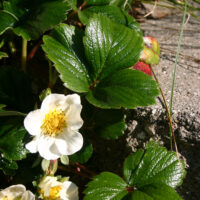
Fragaria chiloensis ‘Green Pastures’
Beach strawberry is native to Pacific coast beaches and bluffs of North and South America. A popular and adaptable groundcover growing well in a wide range of climates and conditions. This selection forms lush carpets of shiny dark green foliage. The five-petaled white flowers are particularly large, showy and profuse in the spring. A great colonizer and stabilizer, this vigorous perennial spreads by runners to form dense carpets. Plant in sun to light shade with moderate to occasional summer water. Drought tolerant along the coast. This ia a male selection and will not fruit. Deer resistant.
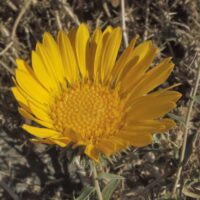
Grindelia camporum
A tough and attractive native perennial found in valleys and lowlands of California. An upright grower, 18-24 inches tall, with resinous foliage and stiff leaves and flower stems. Thick green flower buds hold bright yellow daisies summer through fall which are attractive to bees and butterflies. Best in full sun where it is drought tolerant once established. Tolerates heavy soils and is said to be deer resistant.
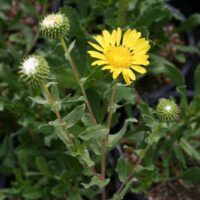
Grindelia hirsutula
Easy to grow, vigorous native perennial that is adaptable to a variety of soils and watering regimes. Grows 1 - 2 ft. tall with good-sized bright yellow daisies over a long period from spring into summer. An excellent nectar plant to add to a habitat garden. With a little grooming and dead heading this sometimes rough looking perennial can look quite handsome in a garden setting. Requires full sun and little to no summer water. Said to be deer resistant.
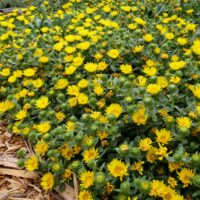
Grindelia stricta var. platyphylla ‘Mendocino’
This selection features particularly large bright yellow 2 1/2 inch daisies over a long period in the summer. Each fat green flower bud holds a dollop of gummy white resin which protects the blooms from predators, hence the name “gum plant”. 'Mendocino' is a particularly prostrate form under 8 inches tall and spreading to at least 6' wide. Native to dunes, marshes and bluffs in coastal scrub throughout coastal California. Excellent pollinator plant. Useful in a meadow planting or with other low groundcovers and shrubs. Looks nice draping over a wall too. An adaptable plant for sun to light shade, moderate to occasional water. A natural along the coast where it tolerates wind and salt spray. Deer resistant.
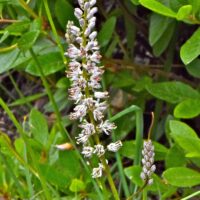
Hastingsia alba
This hard-to-find native bulb features elegant, branched stalks, 3 ft or more high, supporting racemes of sparkling white flowers. The dense blossoms display narrow petals and protruding stamens, giving them a delicate and soft appearance. Grey-green, strap-like leaves grow radially from base of the stalk, creating a tidy rosette 12" - 18" wide. Grows happily in most soils in full sun with regular water, where the bulbs may multiply. In part shade, this lily relative will be a little more drought tolerant. Plants emerge in late winter and go dormant by the end of summer. Hails from the mountains of Northern California, where it makes its home in meadows and open woodlands.
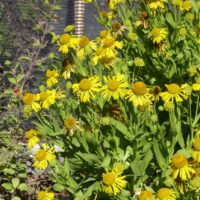
Helenium autumnale
This desirable autumn bloomer is known for its masses of bright yellow daisies up to three inches wide, perched atop stems two to three feet high. Lance-shaped leaves of light green create dense mats six inches high. Native to Northern California and much of North America where it grows in moist meadows. Will slowly increase to form small colonies. Plant in full to part sun and provide regular water. Attracts bees and butterflies. Deer resistant. Despite the common name, this plant is insect pollinated and isn't known to cause hay fever. It was originally used to make snuff, hence the name sneezeweed.
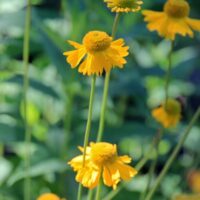
Helenium bigelovii
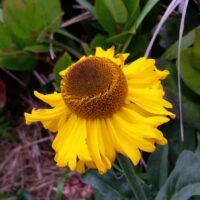
Native to moist meadows of California and S. Oregon, this summer flowering perennial makes a lovely addition to the garden. The cheerful golden-yellow petals turn down slightly from the rounded dome-like center. The golden daisy-like blossoms are held above the rosette of smooth green leaves on 2 - 3 ft. tall stems and attract a wide variety of insects including bees and butterflies. Despite the common name this plant does not cause allergies. It was originally used for snuff, hence the name sneezeweed. Plant in full sun to light shade with regular water. The seed for this crop is from the Pitkin Marsh in Sonoma County.
Helenium puberulum
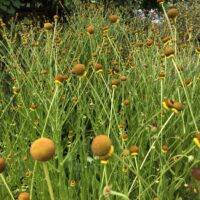
Summer brings clouds of yellow pom-poms which age to brown on this native member of the sunflower family. The round flower clusters sit atop rings of small, down-turned petals, held up on flat stems lined with lanceolate leaves. The flower stalks reach 3 to 5 ft. in height and can be cut down once blooming has finished. Plant in full sun to light shade. Rosilla grows naturally by creeks and seeps and enjoys regular moisture, but will tolerate some drier periods. Attracts a wide variety of insects including bees and butterflies. Goldfinches love the seed. Reseeds readily.
Hibiscus lasiocarpos var. occidentalis (californicus)
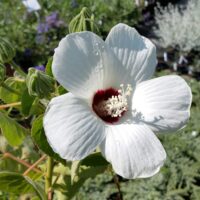
A rare species from wetland habitats in the Delta of the Central Valley, which are seriously threatened due to habitat disturbance and development. A large perennial growing 3 - 6 ft. tall with heart-shaped fuzzy leaves on sturdy stems and large showy white flowers with deep pink centers in the summer. Tropical looking and water loving this interesting herbaceous perennial grows best with summer heat. Plant in full sun to light shade with regular water. Tolerates heavy soils and seasonal flooding. Nice container specimen where its needs may be easier to meet.
Hierochloe (Anthoxanthum) occidentalis
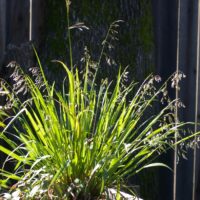
Here is an interesting and elegant grass native to coniferous forests. Broad, bright green, sweetly scented blades grow a foot or more tall. Flowering culms rise another 6 inches or so above the foliage with tight panicles of spikelets. The leaves offer a sweet, vanilla fragrance when dried. Excellent for woodland gardens, compatible with many redwood forest plants. Best with some summer water, but is drought tolerant near the coast. A larval host for the Western branded skipper butterfly. Deer resistant.
Hierochloe (Anthoxanthum) odorata
Invite good spirits into your home and garden with this interesting, fragrant grass. Sweet grass is an aromatic, native perennial, with an extensive range in the United States, Canada and Eurasia. Growing in wetlands, prairies and meadows, it prefers rich, moist, soils and at least half day of sun. The grass flowers sit just above the foliage where they can dance with the wind. This cool season grass is sacred to indigenous people, where it is used in herbal medicine, a kind of tobacco, basket making, and burned as a smudge. Growing 1 - 2 ft. tall and spreading widely by sturdy rhizomes that can be difficult to eliminate once well established. Winter dormant in cold areas. Deer resistant.
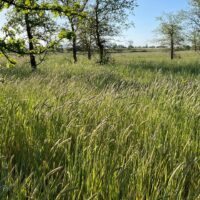
Hordeum brachyantherum
Native to a wide range of vernally wet plant communities throughout California and beyond. Once abundant throughout the Santa Rosa Valley where it could be found in grasslands, seasonal flood plains, moist meadow and open riparian areas. Forms perennial clumps with blades 6-10 inches tall, flower stalks to 30 inches are topped with narrow spikes of purple tinged upward facing bristles, looking like a small version of a classic cereal grain seedhead. Tolerant of heavy clay, alkaline or saline soils. Doesn't make a big impact standing alone, best used in mass or in a blend of other native meadow grasses where its slender flower heads make a pleasing effect. Plant in full sun with vernally wet soils. Deer resistant.
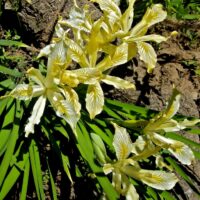
Iris chrysophylla
Native to far northern California and into western Oregon, this uncommon iris grows in fast draining soils in open forests and woodlands. A small scale iris, usually under 12 inches tall in bloom, spreads slowly from slender rhizomes. The delicate blossoms flower in the spring and can vary in color from white to cream to yellow, with a central yellow splash and prominent dark venation. Grow in sun to light shade with occasional to little watering. Visited by bees and hummingbirds. Deer resistant.
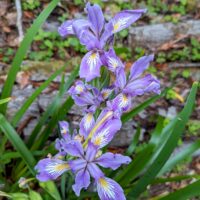
Iris douglasiana – Robust Form
We discovered this incredibly striking form of the popular Douglas iris near Tannery Gulch, outside of Occidental. The dark, evergreen leaves reach up to an astounding three feet in height, and are exceptionally broad. Even though these are grown by seed, the flowers are a dependable lavender-blue, with sprays of white and yellow, held on tall stalks reaching up to a foot above the foliage! Grows well in dappled shade in hotter areas, but can take full sun where there is coastal influence. While drought tolerant, occasional deep soaks keep them looking verdant and vigorous. Deer and gopher resistant.
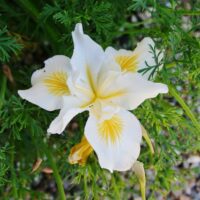
Iris douglasiana ‘Canyon Snow’
A dependable and floriferous selection of the native Douglas iris, with springtime flowers that are pure white with yellow markings on the falls. Broad shiny blades are mostly evergreen and grow a foot or more tall and form compact clumps. Plant in sun to part shade, particularly in hot inland areas, with moderate to little summer water. Prefers good drainage but will grow well on clay soils provided they are mounded up. Too much summer water on heavy soils will prove fatal. Deer resistant.
Iris douglasiana v. major
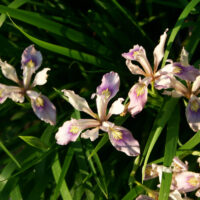
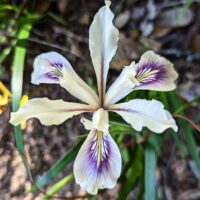
This rare form of the Douglas iris occurs throughout Marin County, offering a rainbow of possible flower colors, including blue-purple, mauve, creamy yellow and white, with all sorts of gradations in between. Since these are seed grown, the color will be a surprise when they bloom. The spring blossoms often have striking venation, and are held on stalks 1’ – 2’ high. Foliage clumps generally reach about a foot tall and spread to form extensive colonies of evergreen, strap like leaves. Plant in full sun in cooler areas, but provide some shade in hotter zones. Plants require little water once established, and are perhaps a little more drought and heat tolerant than the straight species. Deer and gopher resistant.
Iris fernaldii
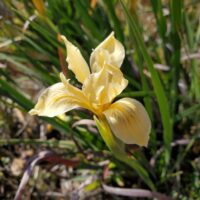
Rarely offered in nurseries, the creamy-white to soft, buttery-yellow flowers of Iris fernaldii brighten up any dry shade to part-sun, inland garden in April. The flowers rise a foot above the evergreen, narrow, strap-like, deep-green foliage. This patch-forming Iris can be found in the more inland canyons of Northwestern California, from the Santa Cruz mountains, throughout inland Sonoma County, to Lake, Colusa, and Glenn counties. Fernald’s iris is well adapted to both extreme heat and cold, but can also perform well in full sun on the coast. Native bees and butterflies are attracted to the cheery flowers of this iris. This species prefers decent drainage and is drought tolerant and deer resistant once established.
Iris innominata
A choice iris with slender, glossy, dark-green leaves and dainty flowers in late spring. Flower color can be from brilliant yellows to shades of purple. Native to the Siskiyou Mountains in Del Norte County, California, into southern Oregon where it forms low, dense, evergreen clumps in openings of woodlands or coniferous forests. This species does better in hot, inland areas than the Douglas iris. Requires good drainage and some summer water. This Del Norte County iris has been used in hybridization programs to produce the popular Pacific Coast Hybrid Iris. Deer resistant.
Iris Pacific Coast hybrid
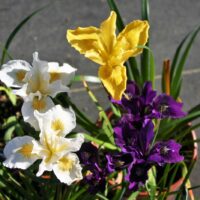
A diverse group bred from the native irises with wonderful coloration, patterning, flower form variation....ranging from soft pastels to mahogany, maroon and midnight purple. Evergreen foliage, about 1 to 2 ft. high. Can eventually form sizable clumps. Full sun to light shade. Often do well as an understory for oaks that needs no summer water. Drought tolerant, moderate to little water when established. Deer don’t seem to eat flowers or foliage.
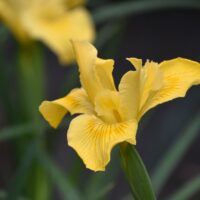
Iris Pacific Coast hybrid ‘Canyon Sunshine’
One of a diverse group of hybrid native irises, this butter-yellow selection with a lemony center is the result of a cross with Iris douglasiana 'Canyon Snow.' The evergreen foliage grows about 1 - 2 feet tall and spreads by rhizomes to form clumps up to 3 feet wide. Tolerates full sun on the coast but does best with afternoon shade inland. Occasional water keeps it looking nice in summer. A good plant for the understory of oaks, where it will require little irrigation once established. Drought tolerant and deer resistant.
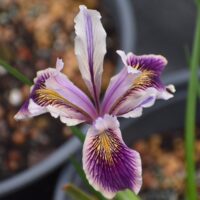
Iris Pacific Coast hybrid ‘Purple & White’
A Pacific Coast hybrid iris with thick purple veins and a splash of yellow at the center of white flowers. The evergreen foliage gets 12-18 inches tall and spreads by rhizomes to form clumps up to 3 feet wide. Does well in full sun in cooler, coastal areas, but needs afternoon shade inland. Occasional water keeps it looking good in summer. A suitable plant for the understory of oaks, where it will require little irrigation once established. Drought tolerant and deer resistant.