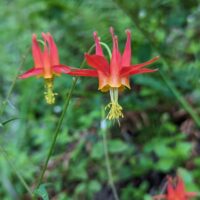
Aquilegia formosa
A popular native perennial with fern-like foliage and wonderful, nodding, spurred blossoms of red and yellow. Best with a little shade and moderate to regular moisture, but will tolerate full sun in somewhat cooler climates. The flower stalks reach 1 1/2’ to 3’ tall, with the grey-green foliage forming a mound of about 1 ft tall and wide. Flowers attract hummingbirds, while the seeds are relished by small birds such as sparrows and Juncos. If seed pods are left on the plants, you may get volunteer seedlings in the fall.
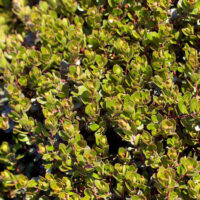
Arctostaphylos ‘Emerald Carpet’
This popular manzanita forms a wonderful, dense, green groundcover around 1 ft. tall by 6 ft. wide. Clusters of small, white, urn-shaped flowers decorate the plant in early winter. A natural hybrid discovered on Haven's Neck on the southern Mendocino Coast. Often planted en mass to create a large scale groundcover. Somewhat slower growing than bearberry and slightly taller over time. Enjoys full sun near the coast but does best in hotter areas with some afternoon shade. Needs moderate water once established.
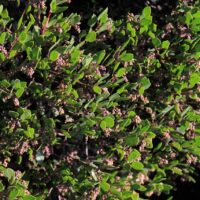
Arctostaphylos ‘Howard McMinn’
One of the most popular of the manzanitas, for several good reasons. It is rounded in form and profusely branched, growing 5 - 7 ft. tall. It has shiny green leaves and abundant light pink flowers. Beautiful mahogany trunks create a wonderful sculptural effect. The dense foliage responds exceptionally well to pruning - even shearing, and tolerates a far greater range of soils and watering regimes than most manzanitas.
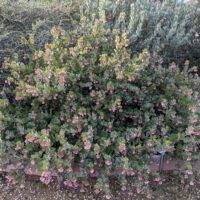
Arctostaphylos ‘John Dourley’
A beautiful mounding manzanita growing 3-4 ft. tall and 6 ft. wide.Bluish-green leaves with gorgeous bronzy new growth, abundant pink flowers followed by red fruits make this vigorous grower a wonderful addition to the garden. Plant in sunny areas with little to no water once established. The early blooming manzanitas provide an important nectar source for hummingbirds and bees.
Arctostaphylos ‘Pacific Mist’
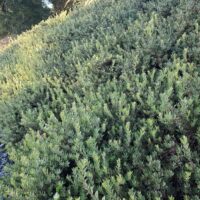
A broadly spreading shrub, fast growing for a manzanita, eventually forming a good dense ground cover 1.5 - 2.5 ft. tall by 10 ft. wide. Handsome gray-green leaves with deep reddish-brown bark. Small clusters of white urn-shaped flowers in late winter are pretty, but it is not a heavy bloomer. This fine introduction from Rancho Santa Ana Botanic Garden is proving to be dependable and disease resistant. Plant in sun or light shade. More drought tolerant than the popular bearberries. In cool summer areas may need no additional summer water once established. In hotter inland sites,occasional deep summer waterings is best. It is believed to be a cross involving the rare Bonny Doon manzanita.
Arctostaphylos ‘Sentinel’
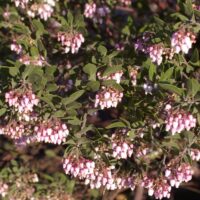
Somewhat more upright in habit but less dense and less uniform than Arctostaphylos 'Howard McMinn', it is a far heavier bloomer with LOTS of vivid pink blossoms and soft grey green leaves. A relatively easy and dependable manzanita, growing 6 - 8 ft. tall and wide, though reputed to be less tolerant of irrigation and heavy soils than A. ‘Howard McMinn’, the most adaptable of all manzanitas. Distinctive burgundy-colored bark. Early nectar source for hummingbirds and bumble bees.
Arctostaphylos ‘Sunset’
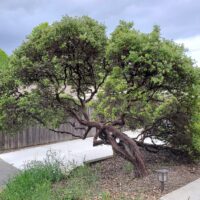
A handsome manzanita growing 6 ft. tall and wide with especially attractive coppery-red new growth. Flowers are urn-shaped pinkish-white. Exfoliating shaggy bark reveals smooth red toned trunks. Can be pruned to expose the beautiful sinuous branching structure. A naturally occuring hybrid discovered near Prunedale in Monterey Co. involving A. pajaroensis and A. hookeri. Tolerant of heavy soils and heat as well as occasional irrigation.
Arctostaphylos bakeri ssp. bakeri ‘Louis Edmunds’
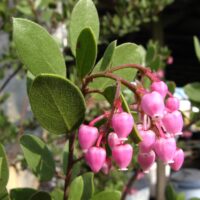
A beautiful and durable upright manzanita reaching 5 - 7 ft. tall and nearly as wide. This species is native to Sonoma Co. where it is considered very rare and threatened by development. Handsome gray-green foliage with wonderful purplish-brown trunks contrast nicely with showy clusters of pink urn-shaped flowers in spring. Great for sunny areas where it endures heat and drought but enjoys an occasional deep watering. The manzanita berries can attract mockingbirds, robins, and cedar waxwings. It provides low shrubby cover for quail and wrentits and its flowers provide nectar for hummingbirds.
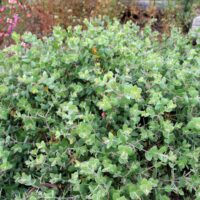
Arctostaphylos cruzensis
This rare, low-growing manzanita comes from the San Luis Obispo coast. Features grey-green, wedge-shaped leaves and soft pink flowers in the winter. Its distinctive creeping habit makes it ideal for crawling over walls or lining walkways. Provide full sun to light shade and moderate to infrequent irrigation once established. Good in containers.
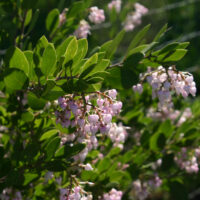
Arctostaphylos densiflora
One of California's rarest natives, this is the pure, true species. Exists only in a very small preserve in western Sonoma Co.. Distinctive for the profusion of beautiful pink to white urn-shaped blossoms they produce in winter and small, shiny bright green leaves. Variable in height but typically grows 3 ft. tall by 6 ft. wide. Does best in its native Sebastopol sandy soils with full sun to light shade and occasional to no summer irrigation.
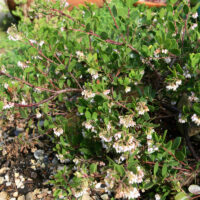
Arctostaphylos densiflora ‘James West’
This wonderful, drought tolerant, low growing manzanita from Sonoma County appears in form and other details to be a selection of the pure species of the very rare Vine Hill Manzanita. It is a very choice cultivar, seldom available in the trade. Grows 18 - 24 inches by 6 ft. in ten years and flowers from January through March with thick heads of shell pink flowers. Good drainage, as with all manzanitas and occasional to no irrigation once established. Full sun.
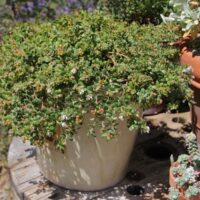
Arctostaphylos edmundsii ‘Bert Johnson’
Choice, low growing manzanita introduced by the Tilden Botanic Garden. Dense, mounding or cascading habit growing to around a foot tall by 6 ft. wide with small dark green leaves and bronzy new growth. Not as fast growing as 'Carmel Sur'. Clusters of tiny pink to white urn-shaped flowers in winter attract hummingbirds and are followed by handsome cinnamon colored little apple-shaped fruits. Excellent cascading over walls, rocks, or containers in sun to light shade. This manzanita has proven adaptable and fairly garden tolerant putting up with heavy soils and more summer water than many. Full sun along the coast with light shade in hot inland sites. Drought tolerant once established but appreciates occasional summer water.
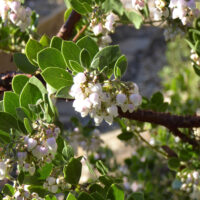
Arctostaphylos edmundsii ‘Big Sur’
Prized for its compact size and clean, rich green foliage, this selection from the Central Coast is a great addition to smaller gardens, where a rounded, upright manzanita is called for, that doesn’t get too big. Reaches 3’ – 5’ tall and 4- 6’ wide, with a somewhat open habit that shows off its beautifully sculpted, burnished red trunk. The winter blossoms are larger than those on many manzanitas, and are a soft, pinkish-white. ‘Big Sur’ enjoys average soil and is tolerant of garden conditions, being quite disease resistant. Plant in full sun or very light shade with little to no water once established. We’ve found it to be very amenable to pruning for small spaces. Gopher resistant.
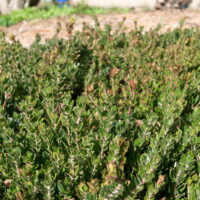
Arctostaphylos edmundsii ‘Carmel Sur’
Perhaps the fastest growing variety of this species. Attractive gray-green foliage with a dense, spreading habit under 1 ft. tall and 6 ft. across. Light pink flowers appear in winter but are few and infrequent. A handsome alternative to other groundcover manzanitas. More drought and heat tolerant than the bearberries and 'Emerald Carpet'. Likes full sun but may enjoy a little afternoon shade in especially hot inland sites.
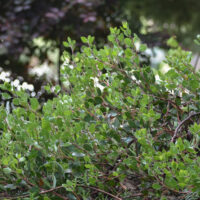
Arctostaphylos hookeri ‘Wayside’
A robust selection of the Monterey manzanita with dense branches growing up to 3 ft. high by 8 ft or more broad. Attractive upsweeping crooked trunks with little white flowers and small deep green leaves. Occurring on open hills around Monterey Bay. Despite its somewhat coastal origin, this selection tolerates, sun, heat and drought quite well. That being said, it will also accept occasional irrigation and light shade. A very useful plant for covering large sunny banks with poor soil.
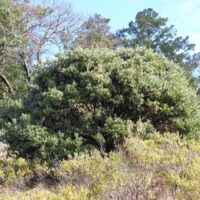
Arctostaphylos manzanita
Good subject for a dry sunny bank where this picturesque native shrub can develop its beautiful form of sinewy branches and smooth red-brown bark. Growing 8-12 ft. tall by 6-10 ft. wide or even larger with time. Flowers heavily in the spring with white to soft pink urn-shaped flowers followed by clusters of tiny apple-shaped fruits. An excellent habitat plant providing food and cover for a wide array of birds. The flowers are an excellent early nectar source for bees and hummingbirds. Very drought tolerant once established.
Arctostaphylos manzanita ‘Dr. Hurd’
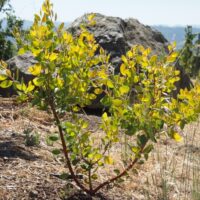
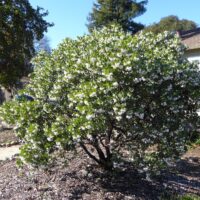
This selection of the common manzanita features large, rounded leaves of a distinctive pale green coloration. Becomes a large shrub or small tree, reaching up to 15 ft. tall with a beautiful mahogany-red trunk and a broad, round form. Showy large clusters of white urn-shaped flowers in January, followed by burnished red berries. Prefers full sun, decent drainage and no irrigation once established.
Arctostaphylos manzanita ‘Garrison Canyon’
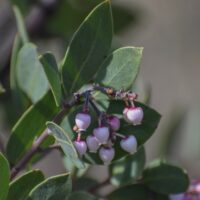
This large, tree-like selection comes from Garrison Canyon on Pepperwood Preserve above Mark West Springs. Big, round, pewter-green leaves adorn branches covered in smooth mahogany bark. Especially large clusters of soft-pink flowers emerge in late winter and are followed in summer by “little apple” fruits. In time, this selection may reach up to 15 ft. tall and wide. Provide full sun. Very drought tolerant once established.
Arctostaphylos manzanita ‘Hood Mountain’
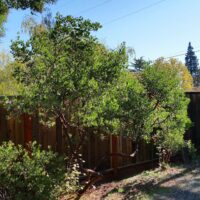
A Nevin Smith introduction from Hood Mountain in Sonoma County, California. A possible natural hybrid with A. canescens, this sturdy upright manzanita offers grayish-green leaves on sculpted, dark pewter-purple branches, growing 10 ft. or more tall and wide at maturity. White, urn-shaped flowers in late winter/early spring are a favorite of hummingbirds and bees. The large upright manzanitas make stunning specimens and, where space allows, excellent hedge or screen plants. Plant in full sun where it will thrive with no summer irrigation once established.
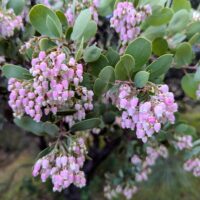
Arctostaphylos manzanita ‘Lake Sonoma Pink’
We discovered this stunning manzanita above Lake Sonoma, which stood out with large, rounded clusters of the pinkest flowers we’ve ever seen on this species. The big, rounded leaves are an appealing grey-green, a pleasing compliment to the colorful blossoms. The smooth, burgundy branches reach up to about 15 ft tall and nearly as wide if left unpruned. Hummingbirds and bumblebees enjoy the late winter flowers, while birds eat the ”little apples” which ripen in the summer. Plant in full sun to light shade and provide little to no irrigation once established. Needs decent drainage. Great as a loose hedge or featured as specimen.

Arctostaphylos manzanita ‘Saint Helena’
A vigorous selection of the common manzanita selected by Nevin Smith from the slopes of Mount St. Helena in Napa County. A beautiful, upright, evergreen shrub with gorgeous, sinewy branches of smooth, red-brown bark and medium green, pointed leaves. Fast growing for a manzanita, this robust and disease resistant selection grows 10 -12 tall and wide with a broad, rounded shape. Pure white, urn-shaped blossoms in late winter and early spring are an important early nectar source for bumblebees and hummingbirds. The bronze, little, apple-like fruits are relished by wildlife. Plant in full sun with good drainage, where it will be drought tolerant once established.
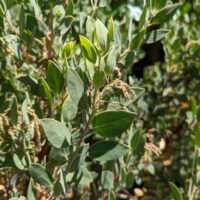
Arctostaphylos manzanita ‘Warm Springs’
From the steep slopes above Lake Sonoma, growing among gray pines, madrones and buckeyes, comes this standout manzanita. We noticed the particularly gray foliage amongst its more green leaved brethren. Has proven to be a vigorous grower, developing gorgeous, smooth, red-purple bark. The winter blooming, urn-shaped flowers are white with a hint of pink. Clusters of beautiful apple-green fruits mature to bronzy-red, decorate the branch tips. Plant this striking evergreen in full sun or very light shade, where it can grow 10 ft. tall or more and will be very drought tolerant once established. An important early nectar source for hummingbirds and bumble bees.
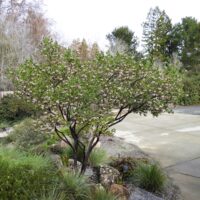
Arctostaphylos manzanita x ‘Austin Griffiths’
Believed to be a cross between 'Sentinel' and 'Dr. Hurd', this hybrid was discovered by Native Sons Nursery and named in honor of a valued volunteer. Glossy green leaves and dark maroon-brown bark form an attractive backdrop for large clusters of soft pink flowers. The blooms appear in early winter, providing a valuable nectar source for hummingbirds and bees. Over time, this upright manzanita can reach a height of up to 10 feet and a width of 8 ft or more. More garden tolerant than 'Dr. Hurd', 'Austin Griffiths' accepts occasional irrigation but can be drought tolerant once established.
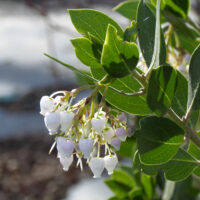
Arctostaphylos manzanita x ‘Laguna White’
Discovered along Guerneville Road near the Laguna de Santa Rosa, this remarkable manzanita boasts dense clusters of clear white flowers in winter with semi-glossy apple green leaves and burgundy colored bark. Plant in full sun where it will reach a height of about 8 -10 ft. tall by 6 ft. wide or more over time. More garden tolerant than many manzanitas, this selection will accept occasional watering after establishment. Though drought tolerant, 'Laguna White' may benefit from deep monthly waterings in the summer, especially in hot interior sites. An excellent early source of nectar for hummingbirds and native bees.
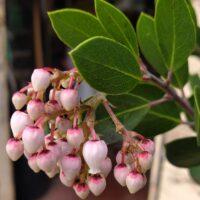
Arctostaphylos manzanita x ‘Mary’s Blush’
This lovely manzanita selection was found along Guerneville Rd. in Sonoma County. Likely a natural cross with the rare Vine Hill manzanita, it has the size and upright form of the common manzanita, with the disease resistance of the A. densiflora hybrids. Initially growing about a foot a year, it will eventually reach 8-10 feet in height. Its slightly-glossy leaves create a dense, tidy appearance, which can be pruned up to show off the deep mahogany trunk. In winter, it blooms prolifically with clusters of pink flowers, followed by beautiful red berries. More tolerant of garden conditions and heavy soil than most, it requires minimal water in summer once established. Its flowers are highly attractive to bees, butterflies, and hummingbirds, and its berries are food for birds.
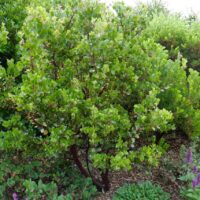
Arctostaphylos manzanita x ‘Molino Corner’
The clear white flowers and attractive, wavy, deep-green leaves make this wild selection from the Sebastopol area a real charmer. Burgundy bark clothes the sinuous trunks on this upright manzanita which reaches 8 ft or more tall and potentially as wide, if left unpruned. The urn-shaped flowers appear in late winter in good-sized clusters, followed by reddish fruits in the summer. This selection is part of a group manzanitas from west Sonoma Co. which naturally share genes with the vine hill manzanita, making them more garden tolerant than most inland forms. Plant in full sun to light shade. Water occasional or let go dry in the summer once established. A great winter food source for hummingbirds and bumblebees.
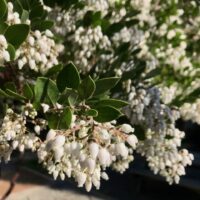
Arctostaphylos manzanita x ‘Sebastopol White’
This upright manzanita displays dense growth of soft green, pointed leaves with clusters of white flowers in winter on a burnished mahogany trunk. Reaches a height of 8 ft or more and a width of at least 6 ft. Discovered along Guerneville Rd. in western Sonoma County. Very drought tolerant once established but will tolerate moderate irrigation when young. A disease resistant selection. Heavy soils are not a problem as long as water does not pool at the crown in winter. Enjoys full sun but will tolerate light shade.
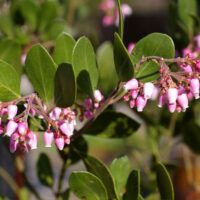
Arctostaphylos manzanita x densiflora ‘Monica’
Found originally along Guerneville Rd. in Sonoma County. It has the form and size of the large common manzanita, 8 ft or more tall with time, and the disease resistance of the Vine Hill manzanita. Features a beautiful dark mahogany trunk and clusters of shell pink flowers set against dark, glossy leaves. The structure is narrower and more upright than most other tall manzanitas, only reaching about 8 ft wide. Give it sun to light shade and summer drought, but it's more tolerant than most of some summer water.Provides food and cover for birds and its flowers provide nectar for hummingbirds and bumble bees.