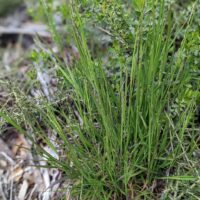
Melica californica
Here is a tough and handsome bunchgrass native to the grasslands and oak woodlands of northern and central coast ranges and the Sierra Nevada foothills. Bright green blades grow about one foot tall. The flower spikes are made up of glistening papery bracts and grow 2 - 4 ft. tall. The ornamental flowering culms remain attractive even after this grass has gone dormant, and is also useful as a “cut” in floral arrangements. Tolerant of many soil types, though it requires good drainage. Plant in full sun to light shade where it is very drought tolerant. Deer resistant.
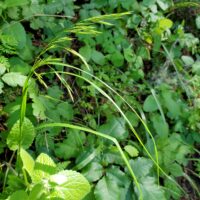
Melica geyeri
This perennial bunch grass is native to many types of habitat in seasonally moist forests and hillsides throughout much of California. Forms a lush, dense bunch of deep-green, broad blades, spreading slowly by rhizomes. The common name refers to the swollen, onion-like corms at the base of the stems. The inflorescence rises 3 ft. tall or more is made up of long, green, narrow spikelets with purple banding. A perfect grass for dappled shade under oaks and firs. Tolerant of some summer irrigation, but can survive the dry season once established. Goes dormant by early autumn. A host plant of the rural skipper and the white-lined sphinx moth. Deer resistant.
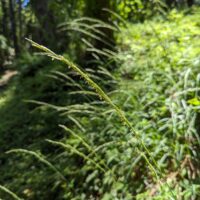
Melica harfordii
A lovely and useful grass native to dryish slopes and canyons of coniferous forests from central California to British Columbia. Forms a loose vertical clump with slightly arching stems 2 to 4 ft. tall. The delicate, narrow flower spikes add a sparkling effect to the woodland garden. Useful in lightly shaded plantings, where it is drought tolerant especially in cooler areas like western Sonoma County. It would benefit from occasional water during the dry season in warmer regions. Adds a nice vertical touch, as a specimen or in mass. Deer resistant.

Melica imperfecta
Native to dry hillsides, chaparral and open woodlands of southern and central California. This dainty native perennial grass grows 1 - 3 ft. tall in flower with narrow, glossy leaves at its base. The slender flower panicles provide a delicate effect, starting out cream and aging to beige. Grows best in cool sun or part shade and responds to some irrigation. Goes dormant if allowed to go summer dry once established, turning green with the winter rains. Useful for lightly shaded meadow plantings and stabilizing slopes. Deer resistant.
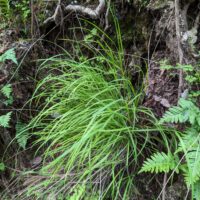
Melica torreyana
At its best in winter and early spring, this little northern California bunchgrass is a perfect mound of soft green blades. In full bloom it can reach 1 - 3 ft. tall, followed by typical melic fruit resembling small brown rice grains held close to the stem. Grows in sun and shade in nature, but performs best/longest in the garden in part shade. Will go semi-summer dormant with drought, but will be evergreen with some moisture. Deer resistant.
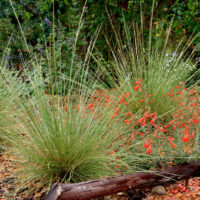
Muhlenbergia dubia
A half size version of the popular deer grass, Muhlenbergia rigens, with many of its attributes - only smaller. Evergreen foliage 12 - 18 inches tall. Narrow flower spikes on erect stems to 3 ft. tall. Adaptable, plant in full sun to light shade, little to moderate summer water. Heat and drought tolerant. Deer resistant too.
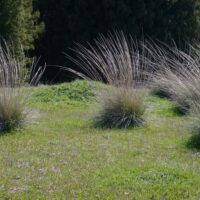
Muhlenbergia rigens
With its graceful, arching habit and tall, attractive seed stalk, this versatile, adaptable native grass is a striking addition to any garden. Forms a tidy, dense clump 3 ft. tall and 3-4 feet wide, making it useful as a specimen and also wonderful planted in mass. Remains mostly evergreen with occasional summer water, but can be periodically chopped down to spur fresh growth. Plant in full sun to light shade. Tolerates moist or dry soils and performs well in clay. Its extensive root system makes it an excellent for soil stabilization. Good habitat value offering seeds for songbirds and is a larval food source for a number of butterflies species. Deer resistant.
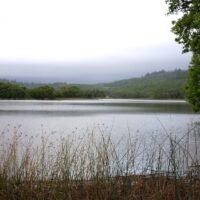
Schoenoplectus (Scirpus) acutus var. occidentalis
Also called giant bulrush, this large bold plant can form massive colonies on the edges of wet areas. Native to freshwater marshes, lakes and stream banks throughout lower elevations in California and much of North America. Vertical, thick, round, leafless stems grow 10 to 15 ft. tall and spread underground. In large landscapes it can be used as a pond or riparian plant where it will form dense thickets. Can be grown in containers for smaller gardens, set just below water level for a dramatic vertical accent. Plant in full sun with regular water. Provides good habitat for wildlife.
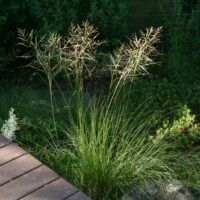
Sporobolus airoides
A robust, warm season bunchgrass, which was common in California’s Central Valley prior to agricultural conversion. This western native is found in the Sierra foothills, South Coast Ranges as well as deserts from eastern Washington to Mexico. Forms a dense bunch of fine textured, grey-green blades, on average 3 foot tall and wide. Graceful flowering stems carry airy, pinkish flower heads that produce a pink-hued haze, which age to tan. The abundant seeds are relished by birds, but do not tend to reseed in gardens. Tolerant of many soil types and water regimes. Best with full sun to light shade. This grass will be drought tolerant, but does best with some summer water in dryer inland sites. Leaves turn butter-yellow in autumn prior to winter dormancy. Deer resistant.
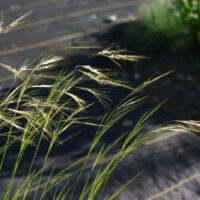
Stipa (Nassella) cernua
A beautiful native grass said to be a more impressive horticultural subject than the tough and useful Stipa pulchra. Forms a tufted bunch of foliage with elegant flower stems to about 2-3 ft. tall. The panicles of thin, fine, nodding awns have a silky aspect and are purplish at first drying silver. They glimmer when backlit. Prefers full sun (but will tolerate light shade) and well drained soils, but has proven adaptable. Drought tolerant. Often self sows. Deer resistant.
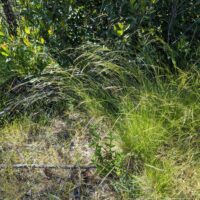
Stipa (Nassella) lepida
The native foothill needlegrass is a fine-bladed, medium-sized, perennial bunchgrass perfectly adapted to our Mediterranean climate. Growing vegetatively during the cool season and flowering in mid to late spring, going dormant with the dry of summer. Tufts of fine-textured blades 8 - 12 inches tall, give rise to slender, graceful flowering stems, 2 ft or more tall with panicles of silky awns which shimmer when back lit. Well suited for the dry garden, open woods, meadows and rocky slopes. Easy to grow, disease and pest resistant, tolerating more shade than other Stipa species. A strong re-seeder and deer resistant. Host plant for a number of butterflies. Deer resistant.
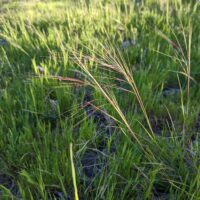
Stipa (Nassella) pulchra
Purple needlegrass is a major species in California grasslands. An excellent choice for naturalistic settings, native plantings, meadows or dry slopes in full sun. Handsome in mass where its purple awns shimmer. The entire plant turns golden come summer then goes dormant, reviving with the rainy season. Very drought tolerant. Can reseed vigorously. Deer resistant.
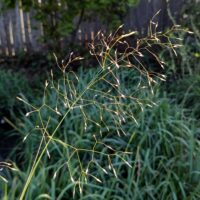
Stipa hymenoides
This rugged, incredibly drought tolerant bunchgrass hails from hot, sunny locations in desert areas and juniper woodlands of California. The inflorescences which emerge above the green foliage in spring and summer, are incredible airy and delicate. By the end of summer, plants take on an ivory color, appearing like billowing little clouds which create a wonderfully soft texture for the late season garden. Plants reach to about 2’ around. In winter, plants will go dormant. Little to no water once established. Needs decent drainage. Deer resistant.