
Adiantum aleuticum
Five finger fern provides a delicate, airy, fresh effect in the shade garden. Easy to grow with regular water and humusy soil. Does well in containers too. Fronds form finger-like patterns on handsome black stems up to 1 1/2 feet tall. Somewhat winter deciduous. Combine with wild ginger, redwood sorrel, leopard lilies and sword fern for a handsome woodland garden. Somewhat deer resistant.

Adiantum capillus-veneris
A lacy and delicate looking fern with arching dark stems that carry bright green fan-shaped leaflets. A wonderful addition to a woodland garden or any shady space where it is easy to grow as long as it receives regular water. Lovely in containers or raised beds, on a shady bank or border, along the north side of a building. Can grow as much as 1 1/2 ft. tall and wide. Southern maidenhair can be grown through much of California except for high mountain areas. Goes winter dormant with cold. Somewhat deer resistant.


Adiantum x tracyi
A naturally occurring cross between Western five finger and California maidenhair fern. Offers a delicate lacy effect with gorgeous bright green fronds on black arching stems. One of the parents is winter dormant, the other, summer dormant, with the resulting hybrid being evergreen. Easy to grow with shade, woodsy soil and summer irrigation. Excellent container plant too. Deer resistant.
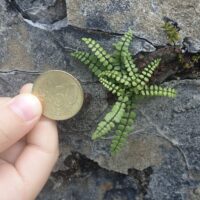
Asplenium trichomanes
This small fern is found in rocky habitats almost worldwide, though uncommon in California, where it is found only in Del Norte County. Tiny, dark green, oval leaves line the black stems of this diminutive evergreen fern. The narrow fronds form short tufts under 8 inches tall that spread slowly. Easy to grow, this little cutie is perfect for tucking into a shady rock garden, wall or container planting. Best in gritty, well drained soils with regular to moderate summer irrigation. Deer resistant.
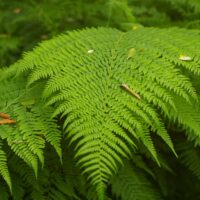
Athyrium filix-femina
Native to much of North America, lady fern grows in moist shady places. The newly emerging fiddleheads in the spring are particularly attractive. The graceful, delicate looking fronds grow 3 foot or more tall by 3 ft. or more wide. Lovely in a forest setting, as a background plant, or around a pond. Goes dormant in the winter. Plant in full to part shade with regular water.
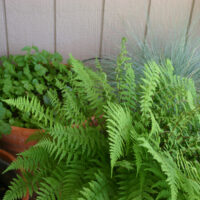
Athyrium filix-femina ‘Minutissimum’
A miniature form of the lovely lady fern, growing up to one foot tall and two feet wide. Forms compact mounds of finely divided light green fronds. Perfect for the small spaces, rock gardens or containers. A vigorous and hardy fern needing only shade and moisture to thrive. Dies back to the ground in the winter. The new unfurling fiddleheads adds charm in the spring. Deer resistant.
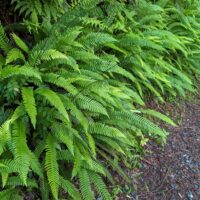
Blechnum (Struthiopteris) spicant
A beautiful and charming fern native to moist coastal forests of northern California. Deep green glossy, narrow fronds are of two strikingly different forms. The outer skirt of fronds is evergreen. The central "fertile" fronds are stiffly erect and airy. It makes for a striking effect. Grows 18" to 2 ft. tall and wide. Best with partial shade to shade and regular moisture.
Dryopteris expansa
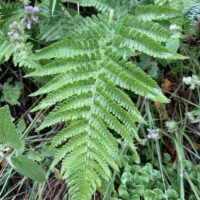
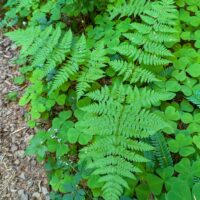
A very elegant native fern, with soft, bright green, finely divided fronds and a gently arching form. Rarely offered in California nurseries. Mature plants reach up to 3’ tall and wide, make them suitable for most garden spaces. Grows in moist, shady woodlands, mostly along our coast, from the Central Coast north to Alaska. Winter deciduous. Very similar to the lady fern, but with triangular-shaped fronds, not diamond-shaped. Said to be deer resistant.
Dryopteris filix-mas
The male fern is a beautiful, large, deciduous fern, native to much of Europe, Asia as well as North America, where it is uncommon in California. Large and slightly arching, the medium green fronds can reach 3 ft. tall and form a sizable clump. This fern increases slowly from stout rhizomes making it a fine choice for containers. An excellent addition to the woodland garden where it is easy to grow in part to full shade. Prefers humusy soil, rich in organic matter, though it is adaptable and accommodating. Best with regular to moderate watering. Rabbit and deer resistant.
Lewisia cotyledon
Named for Meriwether Lewis, this attractive succulent is native to higher elevations in Northern California and Southern Oregon, typically granite outcrops. The flowers which usually emerge in spring and summer, can range in color from yellow to orange to pink to red. These frost hardy plants form evergreen rosettes, approx. 8 - 10” tall by a foot or so wide. Lewisias need very good, sharp drainage, are heavy feeders, and love a granite rock mulch. They like to be grown sideways, in rock walls, where their crown can drain any moisture away. Plant somewhat high in a fast draining mix and feed every now and then. Morning sun, afternoon shade is best inland. Water as you would any succulent, sparingly, and keep the crown high and dry.
Lewisia cotyledon – Sunset Strain
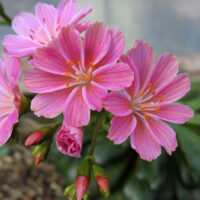
Named for Meriwether Lewis, this attractive and showy succulent is native to higher elevations in Northern California and Southern Oregon, typically on granite outcrops. Abundant floral sprays arise in spring and summer on stalks reaching 6-10" above evergreen foliage. This seed strain has produced a rainbow of flower colors, including: yellow, white, orange, pink and red. The frost hardy rosettes grow to approx. 8-10” tall by a foot or so wide. Lewisias need very good, sharp drainage, and love a granite rock mulch. They like to be grown sideways, in rock walls, where excess moisture drains away. Plant somewhat high in a fast-draining mix and feed every now and then. Morning sun with afternoon shade is best inland. Water sparingly, as you would any succulent, and keep the crown dry.
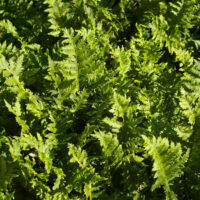
Polypodium californicum ‘Sarah Lyman’
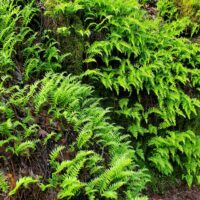
An interesting cultivar of the California polypody fern with finely divided leaves. A wonderful addition to the shade garden where it is perfectly adapted to our dry summers. With the first coolness of autumn the fiddleheads emerge and unfurl. Energetic bright green frilly foliage thrives all winter and into spring. Goes dormant late spring or early summer where it waits out the dry season returning dependably again in the autumn. Grows 12 to 15 inches tall and slowly spreads.
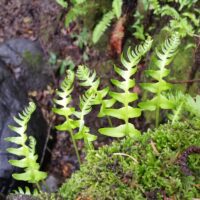
Polypodium glycyrrhiza
Native to moist coastal forests from Monterey County to Alaska. This epiphytic fern enjoys shady environments where it grows on trees, logs and stumps, mossy rocks and slopes. The long, narrow, deeply lobed fronds spread by creeping rhizomes, which have a sweet licorice flavor and a history of use by various native American peoples. They grow happily in moist shady gardens, going summer dormant once conditions get too dry, returning with the autumn rains and coolness. Drought tolerant in somewhat coastal conditions. Good container subject. Deer resistant.
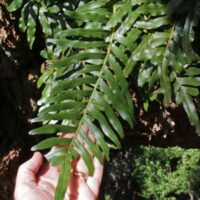
Polypodium scouleri
A choice species native to moist coastal forests of the western U.S. where this fern will grow on trees, rocks and logs. Beautiful, leathery, deeply lobed, evergreen fronds grow on creeping rhizomes to about 8-12 inches tall and slowly spreading. Requires good drainage with a humusy soil and some summer moisture, but not overly wet. Wonderful on rocks, cracks in walls, and logs in shady locations. Excellent in containers. Makes a lovely hanging basket.
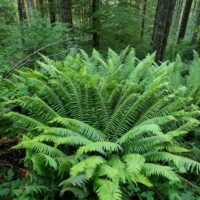
Polystichum munitum
The versatile western sword fern is an evergreen native fern from California to Alaska. In most gardens it will reach about three feet tall and wide. In prime areas near the coast where moisture is readily available and cool temperatures prevail, this fern can get up to 5 feet tall and wide. Excellent for shady beds, along walls, as a large scale groundcover and mixed woodland planting. Best with humusy soil and regular to moderate water, but drought tolerant once established and tolerant of most soil types. Actually quite adaptable and deer resistant.
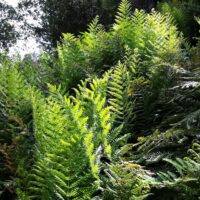
Woodwardia fimbriata
The evergreen giant chain fern is the largest American fern, with striking fronds 4 - 6 ft. tall. Prefers part shade but will accept darker conditions. Will grow in open, somewhat sunny areas within the fog belt, as long as it has access to moisture. Great in moist woodland gardens near a stream or against a shady wall. Keep in mind, this fern likes some moisture but does not want to be kept wet. Allowing it to dry out just a little between waterings can be beneficial. To keep it looking fresh and vigorous, cut back to the ground in late winter just before the new fiddleheads begin to emerge. Deer resistant.