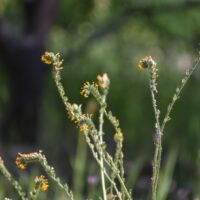
Amsinckia menziesii
A bright, yellow-orange ANNUAL with curled clusters of little trumpet-shaped flowers resembling the scrolled head of a violin. Flower stalks of one-to-three feet tall gradually unfurl with new blooms from mid-spring to early summer. The warmly-colored blossoms are a great nectar source for butterflies and develop into seeds adored by goldfinches and other songbirds. This grassland native adapts to the garden setting, where it prefers full sun and occasional irrigation. Will self-sow.

Clarkia amoena ssp. whitneyi
Nearly extinct in the wild, this beautiful ANNUAL was found in coastal communities in Mendocino and Humboldt Counties. Growing 3 ft. tall and wide, the branched leafy stems are topped with a long succession of 3 inch cup- shaped flowers. The large flowers are light lavender-pink with whitish areas at the base of the petals. Clarkias make excellent garden plants needing very little and giving much in return. Plant in full sun to light shade, as a filler among trees or shrubs, in mixed flower border or meadow planting. A little water while flowering will extend their show. Good container subject too. Excellent cut flowers. Seems to be deer resistant. Attractive to bees and butterflies.
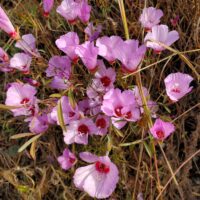
Clarkia rubicunda
Showy and floriferous, with gorgeous, cup shaped blossoms of silky, pink-purple petals featuring a dark red center with a long bloom from late spring into summer. This endemic, ANNUAL wildflower grows in openings of woodlands and chaparral near the coast, mostly in the central part of state. Grows 2-ft. tall or more in full sun with low water needs. Tolerant of heavy soils, the exuberant blossoms attract bees, butterflies and moths, including Sphinx moth species. Performs well in containers and is an excellent cut flower too. Deer resistant.
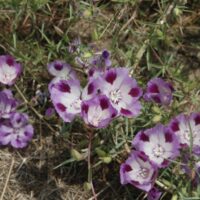
Clarkia williamsonii
The incredibly showy flowers of this native ANNUAL will take your breath away in late spring and early summer. The large, lavender-pink, papery flowers feature deep, burgundy-red brush strokes and cheery white centers. Plants form a loose mound about 1 ½ ft. around. Butterflies and other pollinators love Clarkias. Native to the Sierra foothills, where it grows in full sun to light shade. Plants enjoy moisture while they are developing in the winter and spring, but are accustom to hot and dry summers. Needs decent drainage. Reseeds readily, as long as there is exposed soil nearby. Deer resistant!
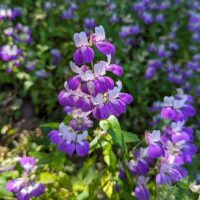
Collinsia heterophylla
A striking form of a native annual wildflower found in open woodlands in much of California. The open lipped flowers are stacked in tiers, and said to look pagoda-like. This charming woodlander is best in bright shade, in edges and openings, or under oaks, where it blooms from mid spring to early summer. Grows around 2 ft. by 2 ft. When happy it will reseed and those seedlings will require no irrigation. A bee and butterfly favorite.
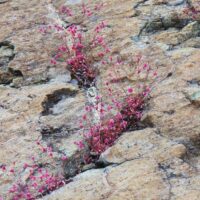
Eriogonum vimineum
Here is an ANNUAL buckwheat found throughout much of California, growing on gravely and volcanic soils. Summer brings showy domes of rose-pink flowers held on wiry stems 18 inches above small clumps of basal leaves. Buckwheats are excellent for attracting beneficial insects providing pollen and nectar for bees and butterflies and seeds for birds. Plant in full sun with little water once established. Good container plant too.
Eschscholzia lobbii – Sundew
This endemic, ANNUAL poppy is more diminutive than the typical big, orange, well known California poppy. Native to inland sites in the Central Valley and Sierra Nevada foothills, where it grows in full sun with good drainage. This floriferous little gem sports smaller, cup-shaped flowers of the most lovely, soft shade of buttery-yellow, atop gray-green, finely cut foliage to about 6 inches tall. Wonderful addition to dry garden plantings, rock gardens, in openings amongst shrubs, perennials or other annuals, or in containers. May reseed if happy. The pollen attracts all sorts of pollinators and is deer and rabbit resistant.
Festuca occidentalis
Western fescue has a wide distribution in western north America, largely found in low to mid elevations of Central California north to British Columbia. Native to conifer, oak and mixed evergreen woodlands where it grows in light shade. Forms dense tufts of fine evergreen foliage 6-12 inches tall. Delicate flower panicles on stems rise 2 ft. or so above the blades in early spring or summer. A nice accent in lightly shaded areas with decent drainage and some summer moisture. Deer resistant.
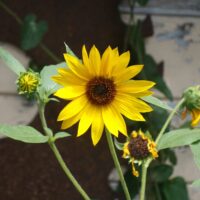
Helianthus annuus
Native to much of North America, this is a wild California selection from the Central Valley just east of Lake Berryessa. A fast growing annual with coarse heart-shaped leaves and topped with an abundance of 3 inch flowers, with bright yellow petals and brown centers on branched stalks. An excellent habitat plant, providing nectar and pollen for a wide array of bees and butterflies as well as seed relished by birds. A highly variable species with a long history of uses and domestication. Plant in full sun where it is adaptable to soil types and watering regimes. Can manage in dryish conditions but best with moderate water, especially early in its growth.
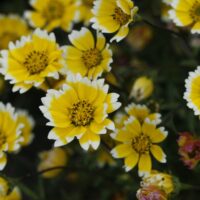
Layia chrysanthemoides
Light up your plantings or containers with this cheerful, ANNUAL wildflower. Boasting clear, bright yellow daisies with pure white-tipped petals, providing a spectacular springtime display. Similar to the common tidy tips, this species is a little smaller, though the flower heads are equally large. Mostly found in the northern part of the state where it is native to vernal pools, grasslands, and valley bottoms, growing in heavy soils and full sun. Attractive to pollinators, especially butterflies. Birds relish the seeds.
Layia platyglossa
Easy to grow native ANNUAL for open sunny areas. Cheerful lemon-yellow daisies with pure white tipped petals entice bees and butterflies. Foliage grows 6-12 inches tall in lean soils and taller with more fertility. Wide distribution, from the coast to inland valleys, Mendocino County to Baja. Birds love the seeds. A knock-out mixed with blues and purples of lupines or baby blue eyes. Does not need water once established.
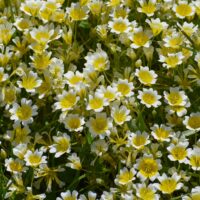
Limnanthes douglasii
California native ANNUAL occurring in grasslands and vernal pools throughout California. Low growing, shiny green foliage is topped with a profusion of sweetly fragrant, cup shaped, bright yellow blossoms with white tips. An excellent choice for low, winter wet areas, drainage swales, retention basins or seasonally dry stream beds. Thrives in heavy soils where it often naturalizes. Plant in full sun to part shade with regular water through the growing season. Fabulous container plant too. Meadowfoam is excellent for encouraging native pollinators, bees and butterflies.
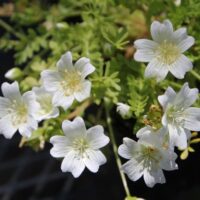
Limnanthes douglasii ssp. nivea
California native ANNUAL occurring in grasslands and vernal pools throughout California. Low growing foliage is topped with a profusion of sweetly fragrant, small white flowers with purple-pink veins on the petals. An excellent choice for low, winter wet areas, drainage swales, retention basins or seasonally dry streambeds. Thrives in heavy soils where it often naturalizes. Plant in full sun to part shade with regular water through the growing season. Good in containers too. Native wildflowers are excellent for encouraging native pollinators.
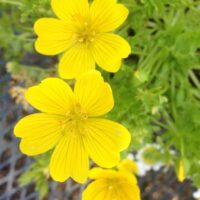
Limnanthes douglasii ssp. sulphurea
Pure yellow flowering form of meadowfoam, rare in the wild but easy to grow in the garden. This native ANNUAL favors seasonally moist areas in full sun. Low growing foliage is topped with a profusion of pure yellow, cup-shaped, fragrant flowers. Useful in low areas, drainage swales, retention basins or seasonally dry stream beds. Thrives in heavy, water retentive soils. Wonderful in containers too. Meadowfoam is excellent for encouraging pollinators and other beneficial insects.
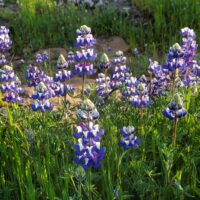
Lupinus nanus
This beautiful ANNUAL lupine can be seen on grassy hills, open slopes and fields, often casting a blue haze of color from a distance in the spring. Low growing, 6 - 20 inches tall and wide, with wonderfully fragrant, rich blue flowers with white markings. Prefers full sun, lean and well drained soils with minimal supplemental watering. Contrasts beautifully with California poppies, providing the classic, blue and gold displays of spring. Attractive to a myriad of pollinators and a larval food source for a number of butterfly and moth species. Deer resistant.
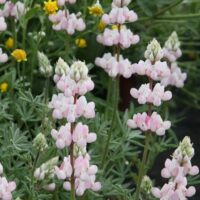
Lupinus nanus – Pacific Pink
Unusual, soft pink flowers distinguish this seed strain of the iconic California sky lupine, the traditionally blue flowered, ANNUAL species which blankets grasslands throughout California in the spring. The blossoms sit in whorls on upright stems above dissected, palmate leaves. This low plant reach 6 – 20 inches tall and wide, combining nicely with low, native perennials and grasses. Enjoys well-draining soil in full sun to light shade. Reseeds fairly readily if exposed soil surrounds the plants. Attractive to a diverse array of pollinators and a larval food source for a number of butterfly and moth species. Deer resistant.
Lupinus stiversii
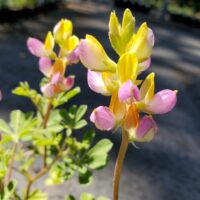
A striking ANNUAL lupine, endemic to California, with a disjunct distribution in the Sierra foothills and separate mountain ranges in Southern California. Instead of the more typical blue or purple flowers, this lupine sports beautiful, bicolored flowers of yellow and pink, on low foliage 6 - 18 inches tall. Grows in open, exposed areas, in full sun with good drainage, and is extremely drought tolerant. Blooms in the spring and offers excellent pollinator value, attracting a variety of insects, and a larval food source for a number of butterfly and moth species. Deer resistant.
Lupinus succulentus
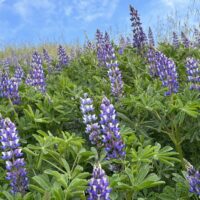
One of the easier-to-grow lupines, this long-blooming ANNUAL is low maintenance and thrives in heavier soils. Bright-green, palmate leaves topped by purple-blue spires quickly reach 2-3 feet tall and wide—or more, if happy. Reseeds easily and returns with winter rains, or whenever conditions are moist and fertile. Although it enjoys moderate to occasional water, it will tolerate both wet and dry areas. Arroyo lupine is found in diverse habitats with a broad native range in California, but prefers full sun and clay-rich soil. Looks splendid planted en masse and can serve as a nitrogen-fixing, seasonal groundcover. All parts of the plant are toxic if eaten, but it's an important butterfly larval host and a food source for native bees. Deer resistant.
Lupinus succulentus
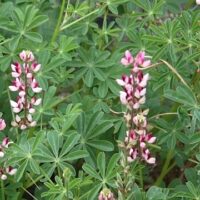
A pretty, pink selection of an easy-to-grow species of ANNUAL lupine. Arroyo lupines have lush, bright-green foliage and attractive flower spikes that typically come in shades of pink or purple. On 'Rodeo Rose', these eye-catching blooms combine rosy-pink wings with banners that turn a dark maroon. Grows quickly to 2-3 feet tall and wide, and reseeds readily at the end of its season. This adaptable species has an affinity for moist, heavy soils, and does well in irrigated gardens, but tolerates drier conditions as well. It is native to diverse habitats and has a broad range in California. Prefers full sun and occasional water. Plant en masse for a gorgeous, seasonal groundcover. All parts of the plant are toxic if eaten, but it's an important butterfly larval host and a food source for native bees. Deer resistant.
Madia elegans
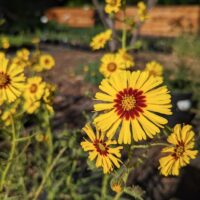
Native ANNUAL growing 3-4 ft. tall with multi branching aromatic stems. Cheerful bright yellow daisies top the stems in the summer and can be solid yellow or may have a maroon spot at the base of each petal. Tarweeds are an important late nectar source for butterflies, bees and other beneficial insects. The seeds are relished by small mammals and birds, especially finches. Native to grasslands and open forests, well adapted to clay soils and full sun, perfectly adapted to our long, dry summers.
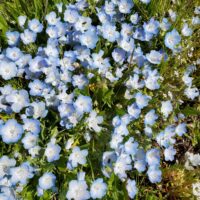
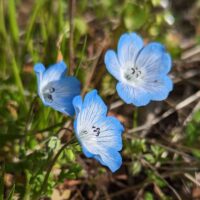
Nemophila menziesii – Frosty Blue
An interesting seed strain of the charming, ANNUAL baby blue eyes. Found in many habitat types throughout California, this beauty has long been in cultivation. The slender, succulent, lobed leaves grow 4 - 6 inches tall, spreading and spilling about 1 ft wide. The "Frosty" in the name refers to the silvery color to the foliage, which contrast nicely with the profusion of gorgeous, bright, baby-blue blossoms. Spectacular in drifts, where it can spill and cascade, at the front of a garden bed, in meadow plantings, rock gardens or in containers. Plant in full sun to light shade where it is early to bloom during the cool of spring. Hot weather triggers seed production. The large black seeds are relished by birds. Reseeds readily.
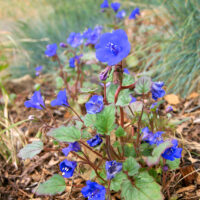
Phacelia campanularia
This ANNUAL is endemic to washes in Southern California deserts. Amazing, royal blue flowers make a show stopping display atop foliage 6-10 inches tall. Surprisingly adaptable, requiring well drained soils, full sun and dryish conditions. Excellent in containers too. Bee favorite.
Phacelia grandiflora
Native to southern California coastal sage scrub and chaparral communities, this native ANNUAL is often a fire follower. Fast growing to 3 ft. tall and topped with clusters of large fragrant blossoms of lavender- blue. Abundant nectar and pollen is highly attractive to bees and a great addition to the habitat garden. Plant in full sun with a little water to encourage long blooming. Often self sows.
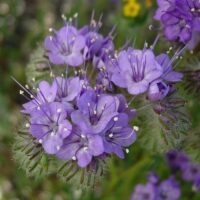
Phacelia tanacetifolia
A robust ANNUAL increasingly used in agriculture as a pollinator attracting cover crop. This native covers the ground and flowers abundantly producing high quality pollen and nectar which is highly attractive to bees and beneficial insects. Fast growing frilly foliage grows 2-4 ft. tall and wide topped with clusters of small lavender-blue cup shaped flowers. Sun to light shade, decent drainage and drought tolerant. Occasional water during flowering will keep it going longer.