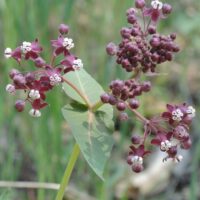
Acmispon (Lotus) glaber (scoparius)
Bees go nuts over the bright-yellow flowers of this California native. From spring and into summer you can find this plant covered in blooms at the edges of chaparral throughout much of California. The intricate, pea-shaped flowers, often colored burnished red as they are pollinated, emerge along wand-like stems. Deerweed usually reaches a height and width of about 2 – 3 ft. Plant in full sun to light shade. Needs good drainage and no summer water once established. A remarkable number of butterflies use this species as a larval host plant, including the bramble hairstreak, orange sulphur, funeral duskywing, silvery blue, acmon blue and the avalon hairstreak.

Adelinia (Cynoglossum) grandis
From woodlands throughout Northern and Central California comes this alluring bluebells relative. Dainty flower clusters ranging in color from periwinkle blue to lavender appear on slender stalks in the spring. The leaves are what gives this plant its name: grey-green and tongue-shaped, emerging in the winter from basal roots. Plant in bright shade and don’t water once established. Needs decent drainage. Once this plant goes to seed it will go dormant, re-emerging in late winter. A great accent plant for under the dry shade of deciduous oaks.

Adiantum aleuticum
Five finger fern provides a delicate, airy, fresh effect in the shade garden. Easy to grow with regular water and humusy soil. Does well in containers too. Fronds form finger-like patterns on handsome black stems up to 1 1/2 feet tall. Somewhat winter deciduous. Combine with wild ginger, redwood sorrel, leopard lilies and sword fern for a handsome woodland garden. Somewhat deer resistant.

Adiantum capillus-veneris
A lacy and delicate looking fern with arching dark stems that carry bright green fan-shaped leaflets. A wonderful addition to a woodland garden or any shady space where it is easy to grow as long as it receives regular water. Lovely in containers or raised beds, on a shady bank or border, along the north side of a building. Can grow as much as 1 1/2 ft. tall and wide. Southern maidenhair can be grown through much of California except for high mountain areas. Goes winter dormant with cold. Somewhat deer resistant.

Adiantum x tracyi
A naturally occurring cross between Western five finger and California maidenhair fern. Offers a delicate lacy effect with gorgeous bright green fronds on black arching stems. One of the parents is winter dormant, the other, summer dormant, with the resulting hybrid being evergreen. Easy to grow with shade, woodsy soil and summer irrigation. Excellent container plant too. Deer resistant.

Agrostis scabra
Native to middle and high elevation forests and meadows throughout California, this small bunchgrass forms dense tufts of blue-green foliage about six inches high with airy inflorescences rising another eighteen inches. Works well in a meadow planting or in a container. Combine with other small perennials such as Grindelia and yarrow or plant in large masses to show off the delicate grass flowers. Needs regular moisture and full sun to light shade. Deer resistant.

Allium amplectens ‘Graceful Beauty’
This western native onion grows in sunny openings in forests and woodlands, often on serpentine. Narrow, fragrant leaves make way for globe shaped flower heads on sturdy stems 12 - 16 inches tall. The flower heads which emerge in late spring and early summer are made up of many starry, white florets with elegant lavender anthers and pale pink veins. Papery bracts persist after blossoms fade, adding interest. If happy can reseed readily. Attractive to bees and butterflies. Very drought tolerant. Reported to be gopher resistant, but may need further analysis. Deer resistant.

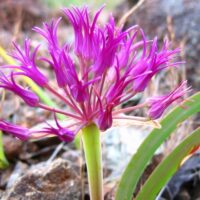
Allium falcifolium
This is one of our favorite native bulbs and it is rarely available in nurseries. In spring or summer, dense, rounded clusters of flowers, ranging in color from light to deep pink, sit atop thick, flattened stems up to 10 inches high. The strap-like leaves are few and don't distract from the chunky blooms. Needs excellent drainage and a lean, rocky soil. Once the flowers are done, allow the plant to go dormant with no irrigation. Native to rocky, sunny outcrops from Santa Cruz up to southwestern Oregon. Nestle among rocks and little succulents to show this unusual onion off to your friends. Works well in a container where its somewhat tricky requirements can be more easily met.
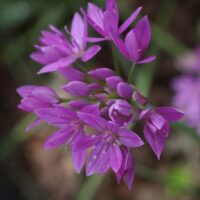
Allium unifolium
An adaptable and easy to grow native onion with handsome blue-green foliage. Late spring brings beautiful lavender-pink flowers on short stems 6 - 8 inches tall. Native in the Coast Range from the Central Coast, northwards. The flowers on this form have a particularly appealing saturated color. The original plants were given to us by the internationally known bulb expert and native plant horticulturist, Wayne Roderick. Fairly water tolerant, often found on seasonally moist and heavy soils. Spreads vigorously by seeds or bulb offsets. Goes dormant after bloom and will tolerate dry conditions at that time. Attractive to bees and butterflies. Reported to be gopher resistant. Deer resistant.
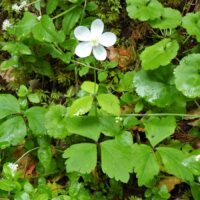
Anemone deltoidea
Rhizomatous perennial native to coniferous forests in the coastal mountains of Northern California through Washington. Forming low colonies, 6 inches or so tall with slender stems holding three leaflets. Simple, pure white flowers with a central shaft of anthers hold themselves just above the foliage. Spreads vigorously and best used with shrubs, ferns or other sturdy subjects. Can romp over smaller perennials. Sweet addition to the woodland garden where it will grow in full to part shade with regular to a occasional summer watering. Good in containers too. Dies back to the ground in winter.
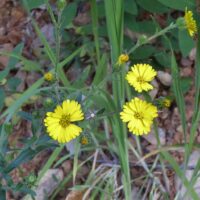
Anisocarpus (Madia) madioides
A quiet perennial, native to woods and coniferous forests of California from sea level to 4000 ft. Dark green, narrow leaves are covered with soft hairs and form a sturdy, low, perennial clump. The bright yellow daisies top 8-10 inch flower stems over a long period, from late spring into summer. Able to thrive in dry shady conditions.May seed about in a friendly way.
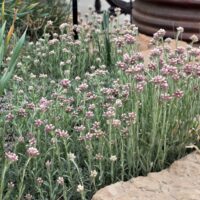
Antennaria rosea
A charming, native, mountain dweller which grows among rocks and onto boulders at meadow edges. Forms low mats only a couple of inches high of woolly, gray leaves that creep and cascade. Short flower stems with small, creamy-white and rosy-pink papery bracts, bloom summer into fall. Plant in full sun to very light shade with good drainage and a little summer water. Good addition for the pollinator garden and is the larval food source for a number of butterflies including the American lady. This is one of the few natives which is so low growing you can plant it between stepping stones.
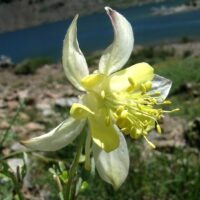
Aquilegia pubescens
Found on open, rocky slopes in the southern Sierra Nevadas in sub-alpine and alpine plant communities. Low rosettes of divided, blue-green foliage, sprout from a taproot. Flower stems rise 10 - 20 inches above the fragrant foliage and carry upward facing, nectar rich, long spurred flowers, perfectly positioned for pollinating hawk moths, hummingbirds and butterflies. The flower color is variable and runs the gamut from cream to yellow to pink, often in delicate hues rather than solid colors, except for an occasional pure white. Hybridizes freely with the native red columbine, which invites various shades of red to the flower color possibilities. Grows well in low elevation gardens, given light shade and summer water.
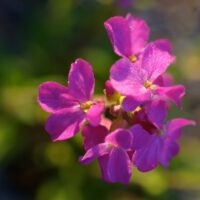
Arabis blepharophylla
A charming spring blooming perennial, native to rocky places of coastal scrub, Santa Cruz to Sonoma counties. The neat foliage grows in tight low rosettes and are topped with vibrant rose-purple mustard-like flowers 8 to 10 inches tall. A natural for coastal areas, it requires some relief from the hot sun and additional water inland. Perfect with other non rampant plants of similar requirements on a slope, rock garden, or along a border. Excellent container plant. Good nectar source for butterflies.
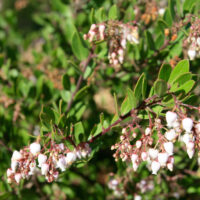
Arctostaphylos ‘White Lanterns’
This lovely manzanita believed to be a selection of A. densiflora originated at the Santa Barbara Botanical Gardens many years ago, but today it is a rare find in nurseries. Slowly growing to a dense mound 3-5 feet tall and wide, this tough and disease resistant plant is equally at home as a beautiful specimen or massed in large plantings. Especially heavy blooming, this shrub is covered with clusters of white blossoms opening from pink buds over a long period in late winter. Excellent early nectar source for hummingbirds and bees. Plant in full sun to very light shade with little to no water once established.
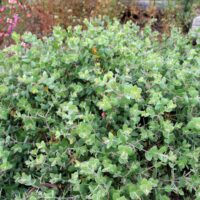
Arctostaphylos cruzensis
This rare, low-growing manzanita comes from the San Luis Obispo coast. Features grey-green, wedge-shaped leaves and soft pink flowers in the winter. Its distinctive creeping habit makes it ideal for crawling over walls or lining walkways. Provide full sun to light shade and moderate to infrequent irrigation once established. Good in containers.
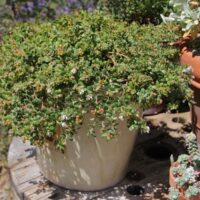
Arctostaphylos edmundsii ‘Bert Johnson’
Choice, low growing manzanita introduced by the Tilden Botanic Garden. Dense, mounding or cascading habit growing to around a foot tall by 6 ft. wide with small dark green leaves and bronzy new growth. Not as fast growing as 'Carmel Sur'. Clusters of tiny pink to white urn-shaped flowers in winter attract hummingbirds and are followed by handsome cinnamon colored little apple-shaped fruits. Excellent cascading over walls, rocks, or containers in sun to light shade. This manzanita has proven adaptable and fairly garden tolerant putting up with heavy soils and more summer water than many. Full sun along the coast with light shade in hot inland sites. Drought tolerant once established but appreciates occasional summer water.
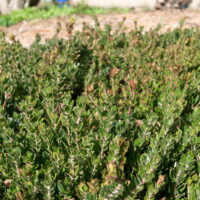
Arctostaphylos edmundsii ‘Carmel Sur’
Perhaps the fastest growing variety of this species. Attractive gray-green foliage with a dense, spreading habit under 1 ft. tall and 6 ft. across. Light pink flowers appear in winter but are few and infrequent. A handsome alternative to other groundcover manzanitas. More drought and heat tolerant than the bearberries and 'Emerald Carpet'. Likes full sun but may enjoy a little afternoon shade in especially hot inland sites.
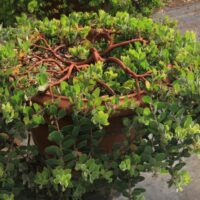
Arctostaphylos glandulosa f. repens ‘Mount Vision’
Found only in the Bishop pine forest of the Point Reyes Peninsula, the repens form has a low and mounding habit. This particular selection was picked for its exceptionally compact and creeping nature and large, gray-green leaves. Clusters of white flowers hang from branch tips in early winter. While slower growing than most other groundcover manzanitas, this cultivar will eventually reach about 6 ft wide with a height of about 1 ft. 'Mount Vision' is best planted as a specimen rather than in mass plantings. Very drought tolerant once established with full sun to light shade. An excellent container plant.
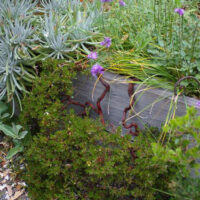
Arctostaphylos hookeri ‘Monterey Carpet’
Evergreen, creeping manzanita less than 1 ft. tall with small, deep green leaves. Dark red branches tend to root and increase its spread to 8 ft. or so wide. Small clusters of white flowers appear in late winter to early spring. Prefers a little shade inland. Drought tolerant but enjoys occasional irrigation in inland sites. Perfect under deciduous oaks or tall pines. Works well in spots where the creeping branches can spill over an edge, creating a cascade effect.
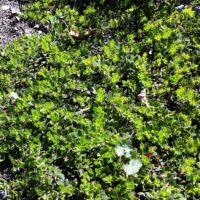
Arctostaphylos uva-ursi ‘Wood’s Compact’
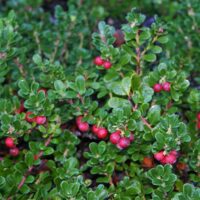
A low growing, spreading manzanita with lustrous green, rounded foliage, little pink urn-shaped flowers and pretty red berries, quite large for the species. This selection from coastal Oregon spreads at a moderate pace to 6-8 feet wide and only getting 6-8 inches tall. Full sun to light shade in hot areas with moderate summer water.
Armeria maritima ssp. californica
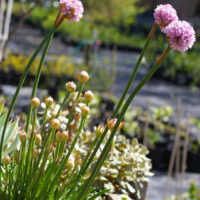
Grown from northern California seed source, this coastal native is a sturdy perennial with grass-like blades in compact clumps. Pink pompom flowers on long stems bloom spring into summer. A natural along the coast where it grows in full sun, needing a little shade in hotter regions. Moderate to little water with decent drainage. Excellent for rock gardens. Deer resistant.
Arnica chamissonis
Native to moist meadows in mountainous regions of California and western North America. This delighful perennial grows 1 - 2 feet tall and wide with cheerful, bright golden-yellow daisies in early summer. The bright green, lance-shaped leaves sit in opposite pairs along them stems. Grow in full sun to light shade with decent draining soils and regular moisture. Said to have the same medicinal properties of its European cousin, but easier to grow. Flowers support bees, bumblebees and butterflies. Winter deciduous. Deer resistant.
Artemisia californica ‘Canyon Gray’
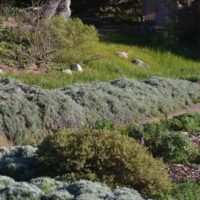
An unusual prostrate form of our coastal native sagebrush, forming a loose, nearly flat mat of finely cut, silvery, fragrant foliage around 4 ft. wide. Useful as a bank cover or for the top of a retaining wall where it can cascade over the edge. Combines beatifully with ceanothus, buckwheats and iris. Should be cut back from time to time to keep dense. Enjoys full sun to light shade and is very drought tolerant once established. Deer resistant.
Artemisia californica ‘Montara’
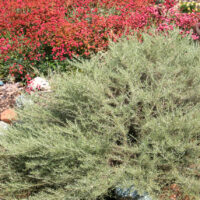
Selected by Roger Raiche at Montara Ridge in San Mateo County. Forms a mound of finely cut fragrant foliage to around 2 ft. tall by 3 ft. (or more) wide. Requires full sun with decent drainage and is drought tolerant once established. Occasional summer water helps retain fresh look. Thrives in coastal environments. Deer resistant.
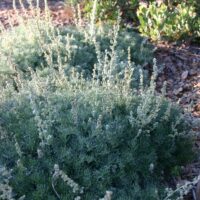
Artemisia pycnocephala ‘David’s Choice’
An exceptionally fine selection of a coastal native. Forms a dense silky mound of silvery foliage 4 - 6 inches tall and up to 2 ft. wide. The floppy flowering stems rise a foot above the foliage and are interesting but not real showy. Shear back for longer life. Sun and drought tolerant. Deer resistant.