

Abies grandis
Grand indeed. Glossy, dark green needles and a symmetrical form make this native fir one of our choicest conifers. Native from coastal Sonoma County, just south of the Russian River, north to British Columbia and east to the Rockies. Grows up to a foot a year and is not suitable for the small garden. Plant in full sun along the coast but protect from hot afternoon sun in the interior. Occasional deep waterings are required when young. Combines well with redwoods and bigleaf maples. Often used as a Christmas tree.


Abutilon palmeri
Lovely, tangerine-orange flowers and fuzzy, grey-green, heart-shaped leaves make this evergreen native a real treat for the gardener. The cup-shaped blossoms appear throughout spring, attracting butterflies, followed by striking seed pods which can accent flower arrangements. A smallish shrub, reaching 4 – 5 ft tall and wide, suitable for full sun or part shade. Plant in soil with decent drainage and water infrequently once established. While native to Southern California, it does well in our area in places which don’t drop below 25F in winter.

Achillea millefolium – Bodega Bay form
Larger leaves up to 10 inches long distinguish this form from most other local yarrow selections. While most yarrow from our coastline have very green leaves, this strain is on the grey side. From spring through autumn, large white flower clusters sit upon stalks about to at least 2 feet in height. Water occasionally in areas away from the coast and provide full sun. The foliage is deer resistant.

Achillea millefolium – inland form – Lake County seed source
A vigorous and easy to grow perennial, yarrow grows native throughout California in many plant communities. This crop is grown from seed collected from a hot inland site in Lake County. In this form, flower stems rise 18 inches above the gray ferny foliage bearing white flowers in flat topped clusters. Plant in a sunny location with moderate to a little water. Spreads by rhizomes and can form sizable clumps if happy. A good addition to the habitat garden where the flowers provide nectar for bees and butterflies and the foliage provides winter forage for birds. The foliage is deer resistant.

Achillea millefolium – inland form – Napa County seed source
A vigorous and easy to grow perennial, yarrow grows native throughout California in many plant communities. This crop is grown from seed collected from a hot inland site in Napa County. In this form, flower stems rise 18 inches above the gray ferny foliage bearing white flowers in flat topped clusters. Plant in a sunny location with moderate to a little water. Spreads by rhizomes and can form sizable clumps if happy. A good addition to the habitat garden where the flowers provide nectar for bees and butterflies and the foliage provides winter forage for birds. The foliage is deer resistant.

Achillea millefolium – inland form – Sonoma County seed source
A vigorous and easy to grow perennial, yarrow grows native throughout California in many plant communities. This crop is grown from seed collected from a hot inland site in Sonoma County. In this form, flower stems rise 18 inches above the gray ferny foliage bearing white flowers in flat topped clusters. Plant in a sunny location with moderate to a little water. Spreads by rhizomes and can form sizable clumps if happy. A good addition to the habitat garden where the flowers provide nectar for bees and butterflies and the foliage provides winter forage for birds. The foliage is deer resistant.
Achillea millefolium – Montara Mountain form
We discovered the parent of this giant seed strain on the lower slopes of Montara Mountain in San Mateo Co.. With broad, white flower clusters reaching up to 4 ft. high, this is the largest yarrow we've encountered. While seedlings can vary, we have high hopes for this new introduction. Give full sun and moderate to infrequent irrigation. Potentially an excellent spreading perennial for a tall meadow. Attracts all sorts of pollinators. The green, fuzzy leaves are usually considered to be deer resistant.

Achillea millefolium ‘Island Pink’
A color variant of the normally white California native yarrow from Santa Cruz Island. Dark green ferny foliage topped with clusters of bright pink flowers on 18 inch stems over a long period. Sun to partial shade, occasional to moderate water. Good habitat value, providing nectar for bees and butterflies. The foliage is deer resistant.

Achillea millefolium ‘Red Velvet’
This yarrow is getting rave reviews for its deep-red flowers produced atop grey-green ferny foliage. Spreading 2 foot or so wide with flowers rising 2 – 2 ½ feet tall. Best in full sun with moderate to occasional watering. Popular with bees and butterflies. Often deer resistant.

Achillea millefolium ‘Sonoma Coast’
This is a local selection from the Sonoma County coast near Salmon Creek. Bright green foliage is topped with white flowers in dense heads on compact stems to around 1 ft. tall. Can bloom over a long period, spring through fall, depending on conditions. Best in sunny areas with some summer water, though it is drought tolerant. Flowers attract butterflies and other insects. The foliage is deer resistant.

Achillea millefolium ‘Terracotta’
This hybrid yarrow forms a mat of grey-green ferny foliage 2 - 3 ft. wide with interesting earth-tone colored flowers. The long-lasting flower clusters simultaneously sport peachy-yellow tones through burnt orange, on sturdy non-floppy stems to around 2 ft. tall. Plant in full sun with moderate to occasional summer water once established. Bees and butterflies love yarrows, but they are not deer favorites. Excellent cut flowers too.

Adenostoma fasciculatum
Chamise is found on the poorest soils in hot, dry, exposed areas of chaparral plant communities. Bright green needle-like leaves cover this evergreen shrub. Late spring brings showy plumes of creamy white flowers in small dense sprays, persisting as they age to reddish brown. This tough shrub can grow 4-10 ft tall and wide depending on conditions. An excellent erosion control plant for tough sites where it holds soil, provides cover for wildlife and acts as a nurse plant, paving the way for the other species to get started. Plant in full sun with no water required once established.

Adiantum x tracyi
A naturally occurring cross between Western five finger and California maidenhair fern. Offers a delicate lacy effect with gorgeous bright green fronds on black arching stems. One of the parents is winter dormant, the other, summer dormant, with the resulting hybrid being evergreen. Easy to grow with shade, woodsy soil and summer irrigation. Excellent container plant too. Deer resistant.

Agrostis pallens
A fine textured, drought tolerant, spreading, perennial grass that forms an undulating, naturalistic, meadow look, or can be mowed and used as a lawn substitute. Native to meadows, open woodlands and forests in many plant communities in California north to British Columbia. Grows 1 -2 ft. tall with airy flower stems in late spring to early summer. May be shy to flower in shady areas. Plant in sun to light shade, with decent drainage, where it will accept both water and drought. Will go dormant in summer without irrigation. If using as a lawn substitute, it will need summer irrigation, though requiring far less than a traditional lawn. Excellent understory among trees or shrubs, for rain gardens, bio-swales, meadows or mowed as a lawn substitute. Host plant for a number of butterflies. Deer resistant.
Agrostis scabra
Native to middle and high elevation forests and meadows throughout California, this small bunchgrass forms dense tufts of blue-green foliage about six inches high with airy inflorescences rising another eighteen inches. Works well in a meadow planting or in a container. Combine with other small perennials such as Grindelia and yarrow or plant in large masses to show off the delicate grass flowers. Needs regular moisture and full sun to light shade. Deer resistant.
Ambrosia chamissonis
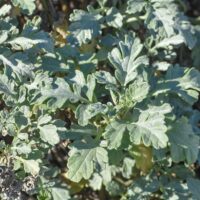
The silvery mats of this sand-dwelling species are important for soil stabilization along our coastline, but can also be used as an attractive, evergreen groundcover in the garden setting. Dissected leaves line crawling branches, forming a dense carpet up to about 10” high and spreading wherever they have room to grow. While vigorous, it can be pruned back easily. In summer, short stalks of inconspicuous, cream colored flowers raise, followed by bur-like seed capsules. Plant in sunny locations with moderate to occasional irrigation. Tolerant of different soil types.
Angelica hendersonii
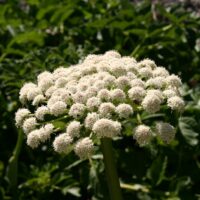
Found in nature on the immediate coast, though well adapted to the watered inland garden. It has the overall look of a stout cow parsnip with creamy white flowers in umbels and pinnately compound leaves of a deep green. Like many umbels, it is a good nectar source for beneficial insects. 4 - 6 ft. tall. Full sun to light shade. Good drainage with moderate summer water.
Anisocarpus (Madia) madioides
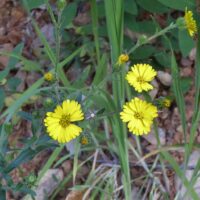
A quiet perennial, native to woods and coniferous forests of California from sea level to 4000 ft. Dark green, narrow leaves are covered with soft hairs and form a sturdy, low, perennial clump. The bright yellow daisies top 8-10 inch flower stems over a long period, from late spring into summer. Able to thrive in dry shady conditions.May seed about in a friendly way.
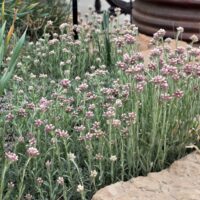
Antennaria rosea
A charming, native, mountain dweller which grows among rocks and onto boulders at meadow edges. Forms low mats only a couple of inches high of woolly, gray leaves that creep and cascade. Short flower stems with small, creamy-white and rosy-pink papery bracts, bloom summer into fall. Plant in full sun to very light shade with good drainage and a little summer water. Good addition for the pollinator garden and is the larval food source for a number of butterflies including the American lady. This is one of the few natives which is so low growing you can plant it between stepping stones.
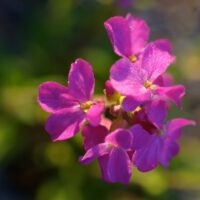
Arabis blepharophylla
A charming spring blooming perennial, native to rocky places of coastal scrub, Santa Cruz to Sonoma counties. The neat foliage grows in tight low rosettes and are topped with vibrant rose-purple mustard-like flowers 8 to 10 inches tall. A natural for coastal areas, it requires some relief from the hot sun and additional water inland. Perfect with other non rampant plants of similar requirements on a slope, rock garden, or along a border. Excellent container plant. Good nectar source for butterflies.
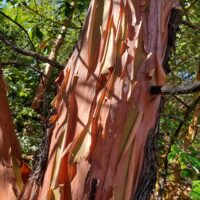
Arbutus menziesii
A beautiful native evergreen tree which features handsome, smooth, reddish bark that peels in thin flakes. Leaves are leathery and shiny dark green. Large clusters of white flowers give way to red-orange berries that can remain into winter if the birds don't get them. It can be tricky to establish, necessitating planting in the fall. MUST have good drainage and just enough water to establish. Once established give only infrequent deep waterings or no water at all. Bees and hummingbirds love the flowers.
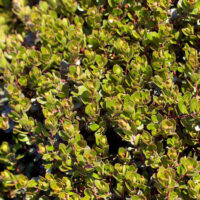
Arctostaphylos ‘Emerald Carpet’
This popular manzanita forms a wonderful, dense, green groundcover around 1 ft. tall by 6 ft. wide. Clusters of small, white, urn-shaped flowers decorate the plant in early winter. A natural hybrid discovered on Haven's Neck on the southern Mendocino Coast. Often planted en mass to create a large scale groundcover. Somewhat slower growing than bearberry and slightly taller over time. Enjoys full sun near the coast but does best in hotter areas with some afternoon shade. Needs moderate water once established.
Arctostaphylos ‘Howard McMinn’
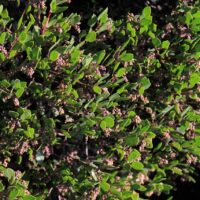
One of the most popular of the manzanitas, for several good reasons. It is rounded in form and profusely branched, growing 5 - 7 ft. tall. It has shiny green leaves and abundant light pink flowers. Beautiful mahogany trunks create a wonderful sculptural effect. The dense foliage responds exceptionally well to pruning - even shearing, and tolerates a far greater range of soils and watering regimes than most manzanitas.
Arctostaphylos ‘John Dourley’
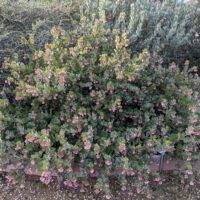
A beautiful mounding manzanita growing 3-4 ft. tall and 6 ft. wide.Bluish-green leaves with gorgeous bronzy new growth, abundant pink flowers followed by red fruits make this vigorous grower a wonderful addition to the garden. Plant in sunny areas with little to no water once established. The early blooming manzanitas provide an important nectar source for hummingbirds and bees.
Arctostaphylos ‘Lester Rowntree’
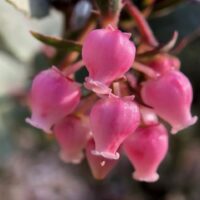
A stunning manzanita named for the early native plant pioneer and groundbreaking woman, Lester Rowntree, who provided the seed. Shapely, upright branches sport bluish foliage with unusual coral-pink, urn-shaped flowers very early, often beginning in October. A special feature for an upright manzanita is the large, glossy, red berries which ripen in the summer. The reddish bark, gorgeous foliage and flowers make this an excellent candidate for sunny areas with little to no summer water once established. This selection, involving A. pajaroensis, develops into a striking specimen, growing 8-10 ft. tall and wide with time. Its early flowering period offers nectar to hummingbirds and bees when not much else native is blooming. Introduced by Rancho Santa Ana Botanic Garden.
Arctostaphylos ‘Lutsko’s Pink’
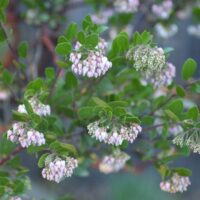
One of the very best ornamental manzanitas, named by Cal Flora for the landscape architect who introduced it: Ron Lutsko. An upright shrub 4 -7 ft. tall, with dark glossy green leaves and covered with blossoms in spring which are blushed pink. Mahogany trunks develop a beautiful contorted shape. Good for dry sunny spot.
Arctostaphylos ‘Pacific Mist’
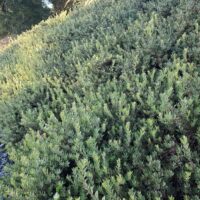
A broadly spreading shrub, fast growing for a manzanita, eventually forming a good dense ground cover 1.5 - 2.5 ft. tall by 10 ft. wide. Handsome gray-green leaves with deep reddish-brown bark. Small clusters of white urn-shaped flowers in late winter are pretty, but it is not a heavy bloomer. This fine introduction from Rancho Santa Ana Botanic Garden is proving to be dependable and disease resistant. Plant in sun or light shade. More drought tolerant than the popular bearberries. In cool summer areas may need no additional summer water once established. In hotter inland sites,occasional deep summer waterings is best. It is believed to be a cross involving the rare Bonny Doon manzanita.